
Climate risks threaten 90% of India's renewable energy projects by 2030
A new report warns that extreme weather could disrupt India's clean energy transition unless adaptation measures are prioritized.
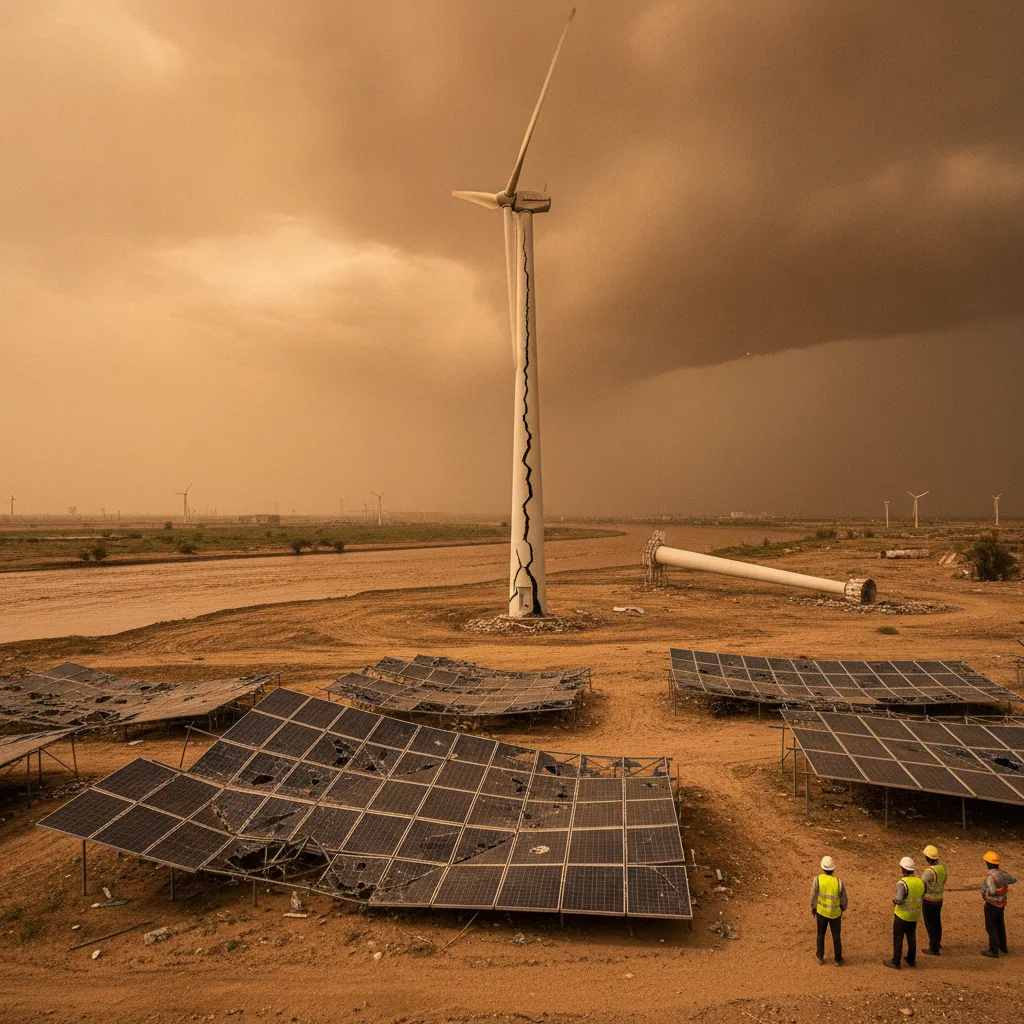
Key findings from the report
Nearly all of India's renewable energy infrastructure, about 90% of installed capacity, will face high climate risk exposure by 2030, according to analysis by Climate Risk Horizons. The assessment covers solar, wind, hydropower and biomass projects across the country.
The report identifies cyclones, floods, heatwaves and changing rainfall patterns as major threats. Coastal wind farms and inland solar installations are particularly vulnerable.
Regional vulnerabilities
Western India's solar projects face extreme heat risks that could reduce panel efficiency by 10-15%. Eastern states' wind farms sit in cyclone-prone zones. Himalayan hydropower projects confront glacial melt and erratic rainfall.
"We're building tomorrow's energy infrastructure in today's climate," said the report's lead analyst. "That climate won't exist in 10 years."
Policy implications
The findings come as India races to meet its 500GW renewable energy target by 2030. Current climate adaptation measures focus largely on coal and nuclear plants, leaving renewables exposed.
Experts recommend three immediate actions:
- Update siting guidelines using climate projections
- Harden infrastructure against extreme weather
- Create risk insurance mechanisms for developers
The Power Ministry has formed a working group to study climate impacts on energy infrastructure. Their recommendations are expected by March 2024.
Comments
Be the first to comment.
Leave a comment