
Co-locating battery storage with solar could reshape India's renewable grid
Putting battery storage right next to solar farms can cut costs, save land, and help India meet its 500 GW clean energy target by 2030.
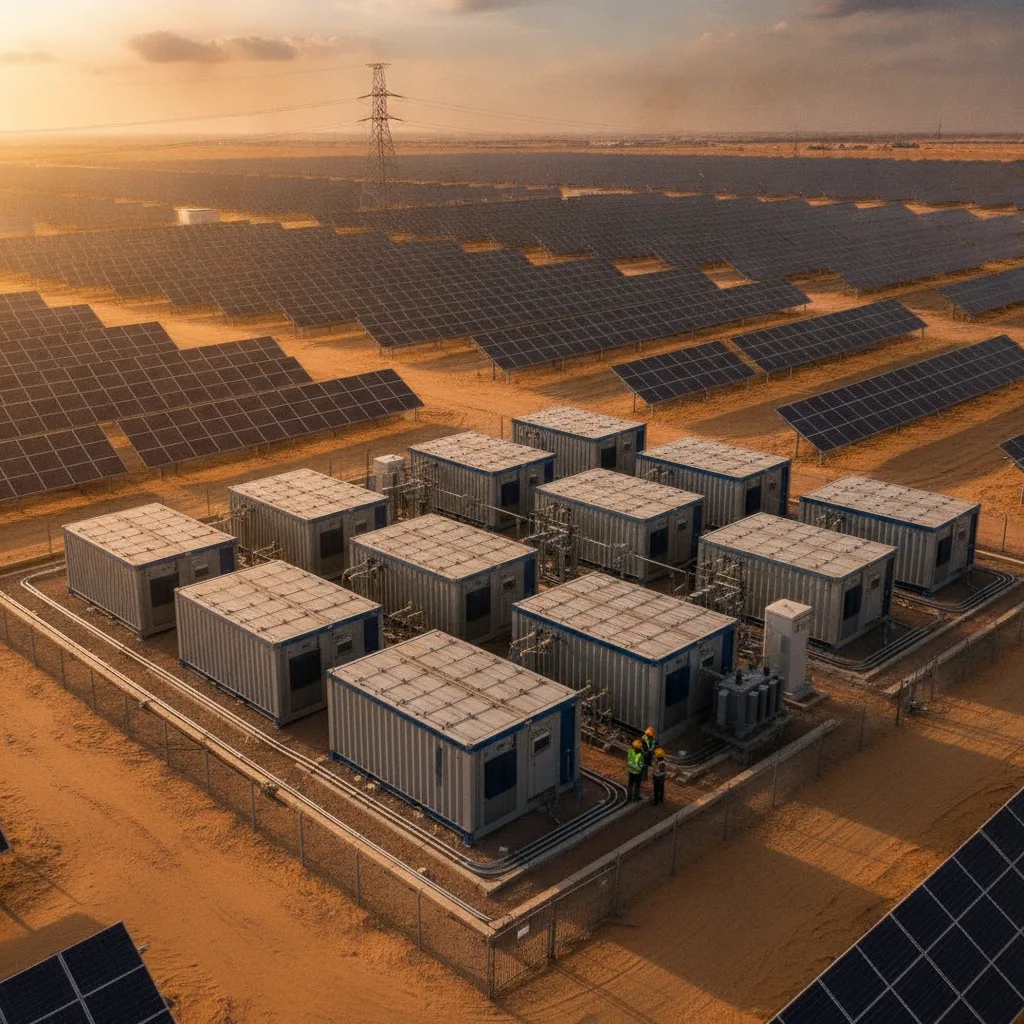
India is racing to add 500 GW of renewable energy capacity by 2030. Solar farms are sprouting across the country. But there is a catch: the sun does not shine all day. When clouds roll in or night falls, solar output drops to zero. That is where battery storage comes in, and where a simple idea could change everything.
The idea is co-location: building battery storage systems right next to solar plants. Instead of shipping power to a distant battery site, you store it where it is made. This cuts transmission losses, saves on land, and makes the whole system cheaper.
Lower costs, less land
India's solar parks already face a land crunch. Finding large, flat plots near transmission lines is getting harder. Co-locating storage on the same plot means no extra land acquisition. The battery system sits on a patch of land that would otherwise be empty or used for panel spacing.
Transmission costs also drop. A study by the Central Electricity Authority showed that co-located solar-plus-storage can cut transmission infrastructure needs by up to 30%. That saves money and speeds up project timelines.
One example is the 100 MW solar plant in Bhadla, Rajasthan. The site now has a 50 MWh battery bank on the same footprint. Project developers say the co-located setup saved roughly 15% on overall project cost compared to a standalone battery at a different location.
Grid stability and peak power
India's grid operator faces a daily challenge: meeting evening peak demand when solar generation fades. Co-located batteries can charge during the day and discharge in the evening. That shifts solar power to the hours when it is needed most.
The Ministry of New and Renewable Energy (MNRE) has pushed for co-location in its latest tenders. In 2024, the Solar Energy Corporation of India (SECI) floated a tender for 1.5 GW of solar with 500 MW/2,000 MWh of co-located battery storage. That is one of the biggest such tenders in the world.
State utilities are watching closely. Gujarat and Rajasthan have both announced plans to add co-located storage to existing solar parks. Karnataka is testing a smaller 20 MW/80 MWh system at a solar farm in Pavagada.
What is holding it back?
Cost remains the biggest hurdle. Battery prices have fallen sharply, down 80% since 2010, but they still add 25-30% to the upfront cost of a solar project. Developers say that without subsidies or cheaper financing, co-location is hard to justify on price alone.
Another problem is the lack of a standard tariff structure. Currently, solar power and stored power are priced differently. Discoms often do not know how to value the flexibility that batteries provide. Until that changes, many developers will stick with plain solar.
There is also a technical issue: heat. Batteries lose efficiency in high temperatures. Many solar parks are in hot desert areas. Cooling systems add cost and use water, which is scarce in those regions.
Policy push and private bets
The government has stepped in. In 2023, MNRE announced a viability gap funding scheme for 4,000 MWh of battery storage, much of it co-located with solar. The scheme covers up to 40% of the capital cost. The first projects under this scheme are expected to start construction in mid-2025.
Private companies are also moving. Tata Power is building a 100 MW solar plant with 50 MWh of co-located storage in Maharashtra. ReNew Power has tied up with a Korean battery maker for a 150 MW/600 MWh project in Gujarat. Adani Green Energy has said it plans to add co-located storage to all new solar projects from 2026 onward.
The International Energy Agency (IEA) noted in a 2024 report that India's co-located solar-plus-storage capacity could hit 30 GW by 2030 if current policies hold. That would cover roughly 10% of India's peak evening demand.
For now, co-location is still a small slice of India's renewable mix. But the math is getting better. As battery prices keep falling and solar tariffs stay low, putting the two together on the same patch of land may soon become the default, not the exception.
Comments
Be the first to comment.
Leave a comment