
Delhi EV Policy 2026: ₹1 Lakh Scrappage Bonus, Tax-Free EVs, Electric-Only Two-Wheelers by 2028
The Delhi government has approved a new electric vehicle policy that offers a ₹1 lakh scrappage incentive, full road tax and registration fee exemptions, and mandates that all new two-wheelers sold in the capital must be electric from 2028.
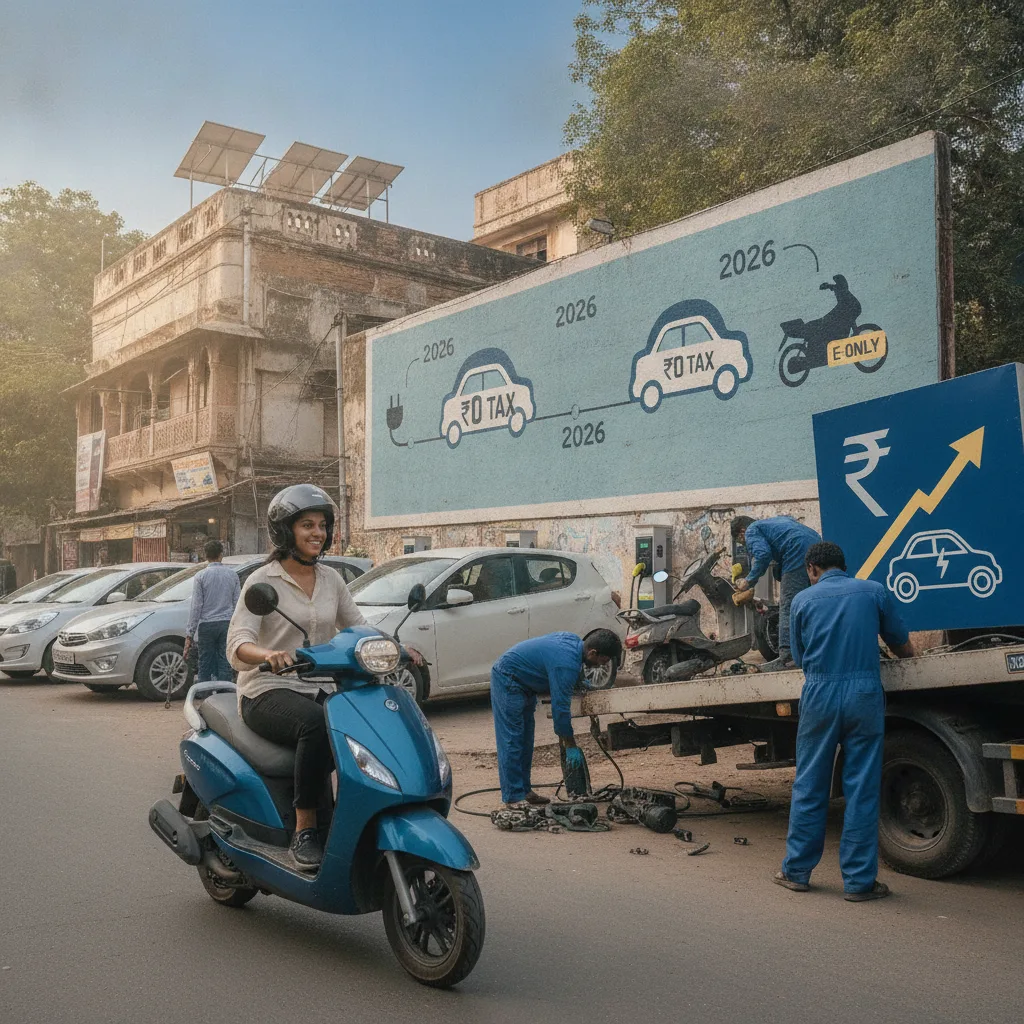
The Delhi government has approved the Delhi EV Policy 2026, a sweeping set of rules meant to push the capital toward cleaner transport. The policy, reported first by Autopunditz, lays out a mix of carrots and sticks: big cash incentives for scrapping old polluting vehicles, tax-free electric vehicle purchases, and a hard deadline for two-wheelers.
Starting immediately, anyone who scraps an old petrol or diesel car and buys a new electric vehicle will get a ₹1 lakh incentive. The government will also waive road tax and registration fees on all new EVs sold in Delhi. That means a buyer could save tens of thousands of rupees on top of the scrappage bonus.
Electric-only two-wheelers from 2028
The policy's most aggressive target is for two-wheelers. From 2028, only electric two-wheelers can be sold new in Delhi. That deadline covers all new registrations. Existing petrol and diesel two-wheelers can still run on the roads. But showrooms will no longer be allowed to sell internal combustion engine models.
Two-wheelers make up about two-thirds of Delhi's vehicle fleet. Forcing them electric will cut a big chunk of the city's tailpipe emissions. The policy also sets a target: 50% of all new vehicle registrations in Delhi must be electric by 2027. That number jumps to 80% by 2030.
Charging infrastructure push
The policy does not just focus on vehicles. It orders the city to build a dense network of charging stations. Every three kilometers in the city must have at least one public charging point. In residential areas, the target is one charging point per kilometer. The government will also offer subsidies to housing societies and commercial buildings that install chargers.
Delhi already has over 2,000 public charging points. The new policy aims to triple that number within two years. The state power utility, BSES, and private firms like Tata Power and EESL are expected to lead the rollout.
Scrappage and old vehicles
The ₹1 lakh scrappage incentive is meant to pull old, dirty vehicles off the road. To qualify, the old vehicle must be at least 15 years old for petrol and 10 years for diesel. The scrapped vehicle must be turned over to a registered scrapping center. The incentive applies only to the first owner of the new EV.
The policy also bans older diesel cars from plying in Delhi. Vehicles that fail to meet Bharat Stage VI norms will be phased out faster. The government says it will set up more automated scrapping centers to handle the expected surge in old vehicles.
Commercial vehicles and e-buses
For commercial vehicles, the policy sets a target: 25% of all new buses, taxis, and goods vehicles must be electric by 2026. That includes e-rickshaws and e-carts, which already run in large numbers in Delhi. The Delhi Transport Corporation will also add 1,500 new electric buses to its fleet by the end of next year.
Auto-rickshaws and taxis will get a separate incentive: a ₹30,000 subsidy for switching to electric. The policy also waives the permit fee for electric commercial vehicles for the first two years.
Funding and enforcement
The Delhi government has set aside ₹500 crore for the first two years of the policy. The money will come from the state's air quality improvement fund and a small cess on diesel sales. Violators who sell petrol or diesel two-wheelers after the 2028 deadline will face fines of up to ₹5 lakh per vehicle. The transport department will run random checks at dealerships.
Environmental groups have praised the policy's ambition but warned that enforcement will be the real test. Delhi's air quality remains among the worst in the world, and vehicle emissions account for roughly 40% of the city's PM2.5 pollution.
Comments
Be the first to comment.
Leave a comment