
Delhi EV policy could set national benchmark, say industry leaders; gig workers demand safeguards
Industry leaders say Delhi's new electric vehicle policy can become a model for the rest of India, while gig workers push for stronger protections.
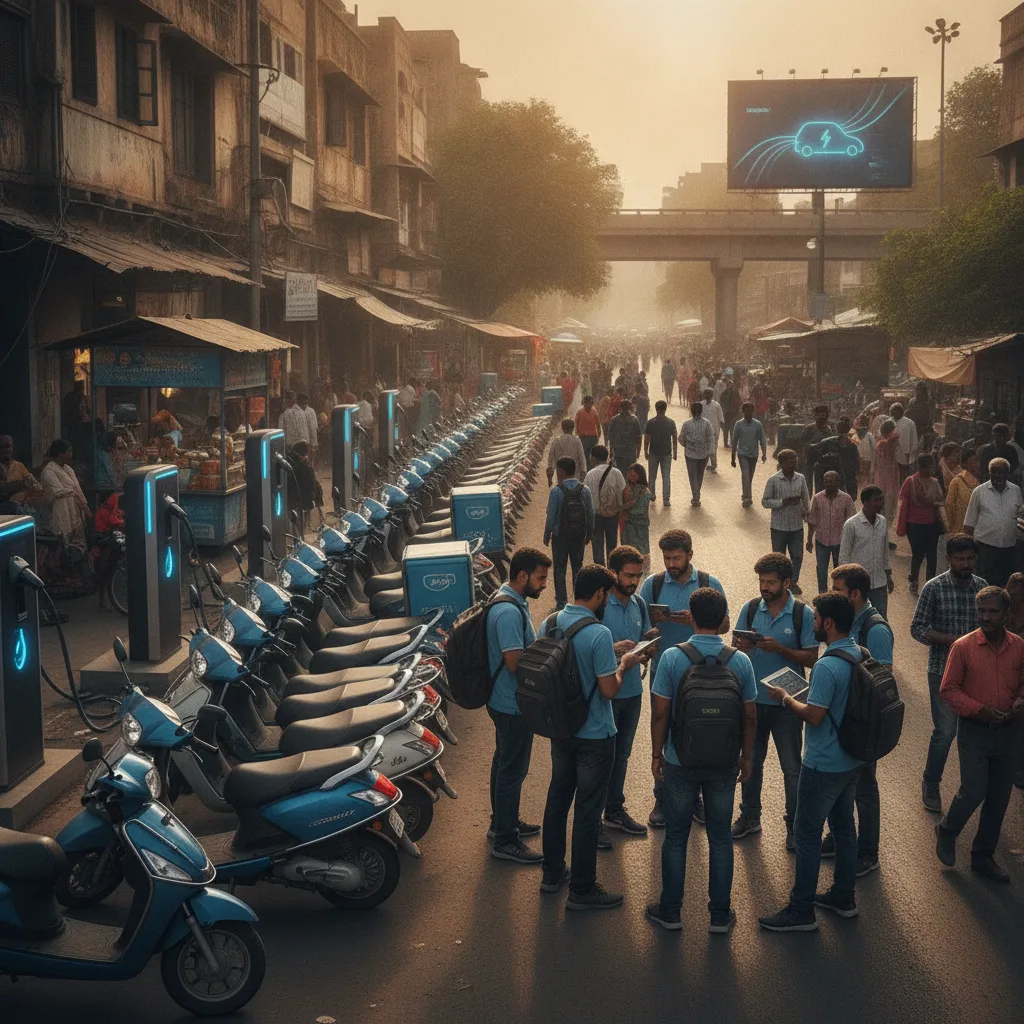
New Delhi: Industry leaders have said that Delhi's new electric vehicle policy could set a benchmark for the rest of India. But gig workers, who make up a large part of the EV delivery and ride-hailing workforce, are demanding stronger safeguards.
The Delhi government's EV policy, which aims to push electric two-wheelers, three-wheelers, and public transport, has drawn praise from automakers and clean-energy groups. They say it offers clear targets, purchase incentives, and a plan to build charging stations across the city.
"Delhi has shown the way. If other states follow, India's EV transition will speed up," said a senior official from the Society of Indian Automobile Manufacturers (SIAM), speaking at a recent industry conference.
But the policy's focus on vehicle adoption has left some workers worried. Gig workers, delivery riders for food and e-commerce apps, and cab drivers for ride-hailing platforms, say they face low pay, long hours, and no job security. They want the policy to include rules on fair wages, insurance, and access to charging points.
"We drive these EVs, but we don't own them. The companies get the subsidies. We get the risk," said a delivery rider who works for a major food delivery app in Delhi. He asked not to be named.
Industry leaders argue that the policy alone cannot fix all worker issues. They say companies must step up. "The policy is about vehicles and infrastructure. Worker welfare is a separate matter for employers," said a representative from a leading EV maker.
Still, some see a chance to set a wider standard. "If Delhi can make the EV shift work for everyone, companies, drivers, and the climate, it will be a model for the whole country," said an analyst at a clean-energy think tank.
The Delhi EV policy, launched in 2020, targets 25% of all new vehicle registrations to be electric by 2024. It offers up to Rs 30,000 in subsidies for two-wheelers and Rs 30,000 for three-wheelers. It also plans to set up 200 charging stations across the city.
So far, the policy has helped push EV sales in Delhi. In 2023, electric two-wheelers made up about 12% of new two-wheeler sales in the city, up from 3% in 2020. But worker groups say the gains have not reached the people who drive these vehicles daily.
"We are not against EVs. We want a fair deal," said a representative of a Delhi-based gig workers' union. "The policy should link subsidies to worker conditions. If a company gets benefits, it should also ensure fair pay and safety."
The Delhi government has not yet responded to these demands. Officials say they are watching how the policy works before making changes. "We are open to feedback. But first, we need to see if the current plan meets its targets," a transport department official told The New Indian Express.
Other Indian states are watching closely. Maharashtra, Karnataka, and Tamil Nadu are working on their own EV policies. Industry leaders say Delhi's approach, with clear targets, purchase subsidies, and a focus on charging infrastructure, could be a template.
"Delhi has done the hard work of testing what works. Others can learn from it," said the SIAM official.
Gig workers say they will keep pushing. "We will not stop until our voices are heard. EVs are the future, but the future must be fair," said the union representative.
Comments
Be the first to comment.
Leave a comment