
Delhi exempts EVs under ₹30 lakh from tax, bans new petrol two-wheelers from 2028
The Delhi government has announced a sweeping set of electric vehicle incentives, including full road tax and registration fee waivers for e-cars priced below ₹30 lakh, and a ban on new petrol-powered two-wheelers starting in 2028.
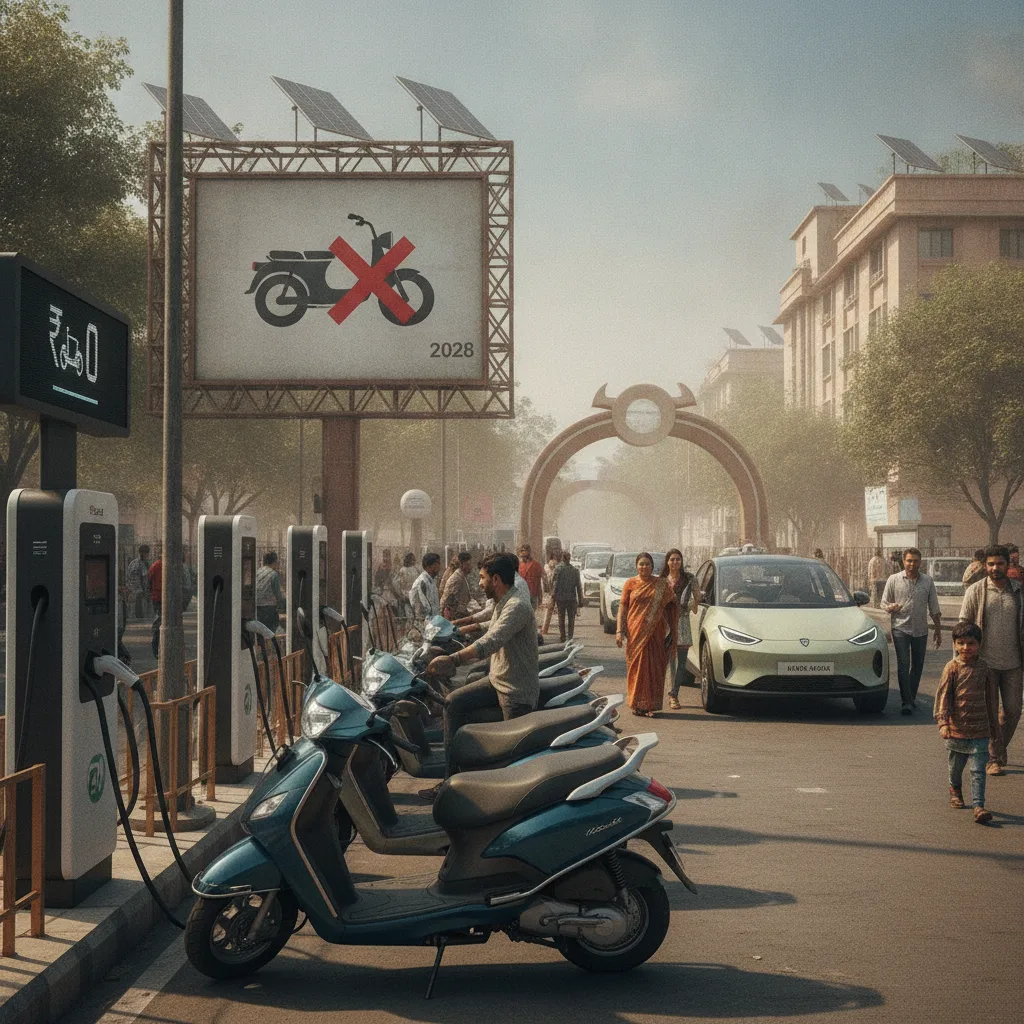
The Delhi government has rolled out its most aggressive electric vehicle push yet. E-cars priced under ₹30 lakh will be completely exempt from road tax and registration fees. No new petrol-powered two-wheelers will be allowed for sale in the capital from 2028.
The announcement, reported by India Today, marks a clear shift in Delhi's transport policy. The city has long struggled with some of the worst air quality in the world. Vehicles account for a large share of the capital's pollution.
Tax breaks for cleaner cars
Under the new rules, buyers of electric cars that cost less than ₹30 lakh will pay zero road tax and zero registration fees. The move is meant to close the price gap between electric and petrol cars. Most mass-market EVs in India, including the Tata Nexon EV and the MG ZS EV, fall under that price cap.
Delhi already had a partial EV policy. This update goes further. Earlier incentives covered all EVs, but the new tax waiver for cars is tied to a specific price ceiling. The government wants to nudge buyers toward affordable electric models rather than luxury ones.
Petrol two-wheelers face a hard deadline
The most striking part of the policy is the 2028 ban on new petrol-powered two-wheelers. From that year onward, no new petrol motorcycle or scooter can be registered in Delhi. Only electric two-wheelers will be sold.
Two-wheelers make up the bulk of Delhi's vehicle fleet. Over 70 percent of all vehicles in the city run on two wheels. Shifting that segment to electric could cut emissions sharply. The ban gives manufacturers and buyers six years to prepare.
Some industry groups have raised concerns about charging infrastructure. Delhi currently has around 1,800 public charging points, far fewer than what would be needed to support millions of electric two-wheelers. The state government has promised to expand the network, but no specific targets were released in this announcement.
What the policy covers
- Full road tax and registration fee exemption for e-cars under ₹30 lakh.
- No new petrol two-wheeler registrations allowed from January 1, 2028.
- Existing petrol two-wheelers can continue to be used and resold.
- Incentives for electric rickshaws and e-carts remain in place.
Reactions and roadblocks
Environmental groups welcomed the move. They said the two-wheeler ban was long overdue. But some warned that the policy's success hinges on reliable charging and affordable battery replacement costs.
Automakers have not yet issued formal statements. Several companies, including Ola Electric, Ather Energy, and Bajaj Auto, have already built strong electric two-wheeler lines. Hero MotoCorp and Honda Motorcycle & Scooter India still rely heavily on petrol models. They face the biggest transition challenge.
Delhi's government has not said whether it will offer scrappage bonuses for old petrol two-wheelers or subsidies for home chargers. Those details are expected in the final policy document, which will be published after a public comment period.
The policy also leaves out electric bikes and scooters priced above ₹1.5 lakh. Buyers of premium electric two-wheelers will not get the same tax breaks as those buying cheaper models.
Delhi joins a small but growing list of Indian cities with explicit petrol-vehicle phaseout dates. Bengaluru and Mumbai are studying similar bans. National clean-air targets require all state capitals to submit EV transition plans by 2026.
For now, Delhi's message is clear: if you want a new car, make it electric. If you want a new bike, make it electric, or buy it before 2028.
Comments
Be the first to comment.
Leave a comment