
Delhi’s New EV Policy Could Reshape India’s Electric Mobility Market
The Delhi government's latest electric vehicle policy aims to boost adoption through purchase subsidies, scrappage incentives, and expanded charging infrastructure, potentially setting a template for other states.
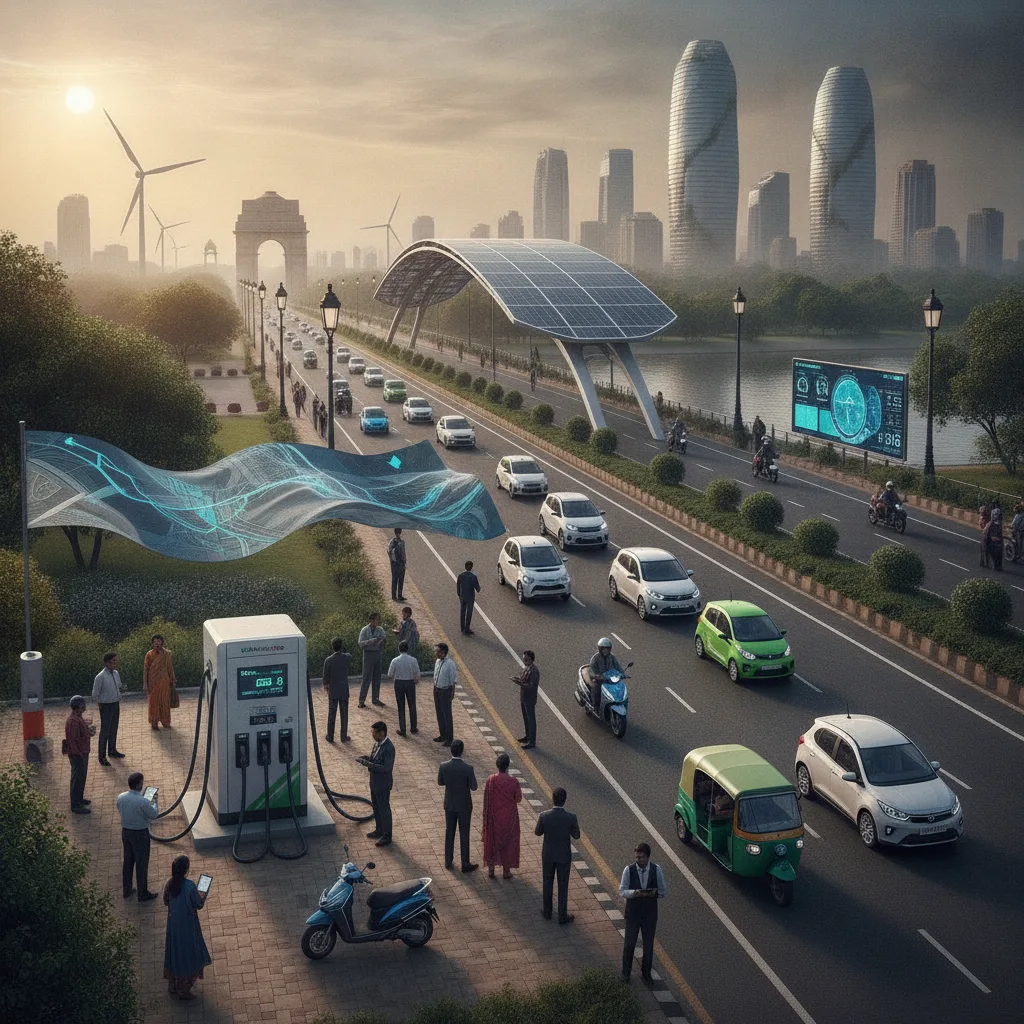
Delhi's new electric vehicle policy is out. And it could change how India moves.
The policy, announced by the Delhi government in late 2024, replaces the city's 2020 EV scheme. It runs until 2028. The goal is simple: push EV sales to 25% of all new vehicle registrations in the capital by 2027. That is a big jump from current levels.
Under the old policy, Delhi saw over 200,000 EVs registered. But growth had slowed. The new rules try to fix that.
What the policy offers
The centerpiece is a purchase subsidy. Buyers of electric two-wheelers get up to ₹10,000 per vehicle. For electric three-wheelers, the subsidy is ₹30,000. Electric cars get ₹50,000. These are direct cuts to the upfront price.
There is also a scrappage bonus. If you turn in an old petrol or diesel two-wheeler, you get an extra ₹5,000 off a new EV. For cars, the bonus is ₹10,000. The idea is to pull old, polluting vehicles off Delhi's roads.
The policy waives road tax and registration fees for all EVs. That saves buyers another 5% to 10% of the vehicle cost.
Charging gets a push
Delhi plans to install 18,000 new public charging points by 2027. Right now, the city has roughly 3,000. That is a six-fold increase. The government will pay for the land and grid connections. Private firms will run the chargers.
Residential areas get special attention. The policy mandates that all new apartment blocks and group housing societies set aside 20% of parking spots for EV charging. Existing buildings get fast-track approvals to install chargers.
For fleet operators, think delivery bikes and ride-hailing cars, the policy offers low-interest loans. The Delhi government will cover part of the interest cost through a credit guarantee fund.
Who wins, who loses
Two-wheeler makers stand to gain the most. Two-wheelers make up 70% of Delhi's EV registrations. Companies like Ola Electric, Ather Energy, and Bajaj Auto already sell heavily in the capital. The extra subsidy could push their volumes higher.
Three-wheeler makers also benefit. Electric rickshaws and cargo tuk-tuks are common in Delhi. The policy gives them a clear path to replace older, diesel-powered models.
Car manufacturers face a mixed picture. The ₹50,000 subsidy is small compared to a car's price. But the road tax waiver is significant. For a ₹10 lakh EV, that saves the buyer ₹1 lakh or more. Tata Motors and MG Motor, which sell the most EVs in Delhi, could see a bump.
Petrol stations and auto repair shops lose out. Fewer combustion engines mean less fuel sales and fewer oil changes. The policy does not offer them any transition support.
Broader market impact
Delhi is India's largest EV market by volume. Its policy often becomes a model for other states. Maharashtra, Karnataka, and Tamil Nadu have all watched Delhi's moves closely in the past. If Delhi hits its 25% target, other states may follow with similar subsidies and charging mandates.
That could push national EV sales higher. India's overall EV penetration is about 7% of new vehicle sales. A Delhi-driven uptick could nudge that toward 10% by 2028.
But there are risks. The policy depends on state funds. Delhi's budget for EV subsidies is ₹500 crore over five years. If demand outpaces that, the government may have to cut subsidies mid-policy. That happened in 2022, when the central government slashed FAME II subsidies and sales crashed.
And charging infrastructure is still a bottleneck. 18,000 new points sound good, but Delhi has over 11 million vehicles. Even with the new chargers, the ratio would be one charger for every 600 vehicles. Industry experts say the ideal ratio is 1:40.
Still, the policy sends a signal. Delhi is betting big on electric mobility. If it works, the rest of India may follow.
Comments
Be the first to comment.
Leave a comment