Electric Passenger Vehicle Sales in India Could Hit 300,000 by 2026
A new projection shows India's electric passenger vehicle market is speeding toward a major milestone, with sales expected to cross 3 lakh units in 2026.
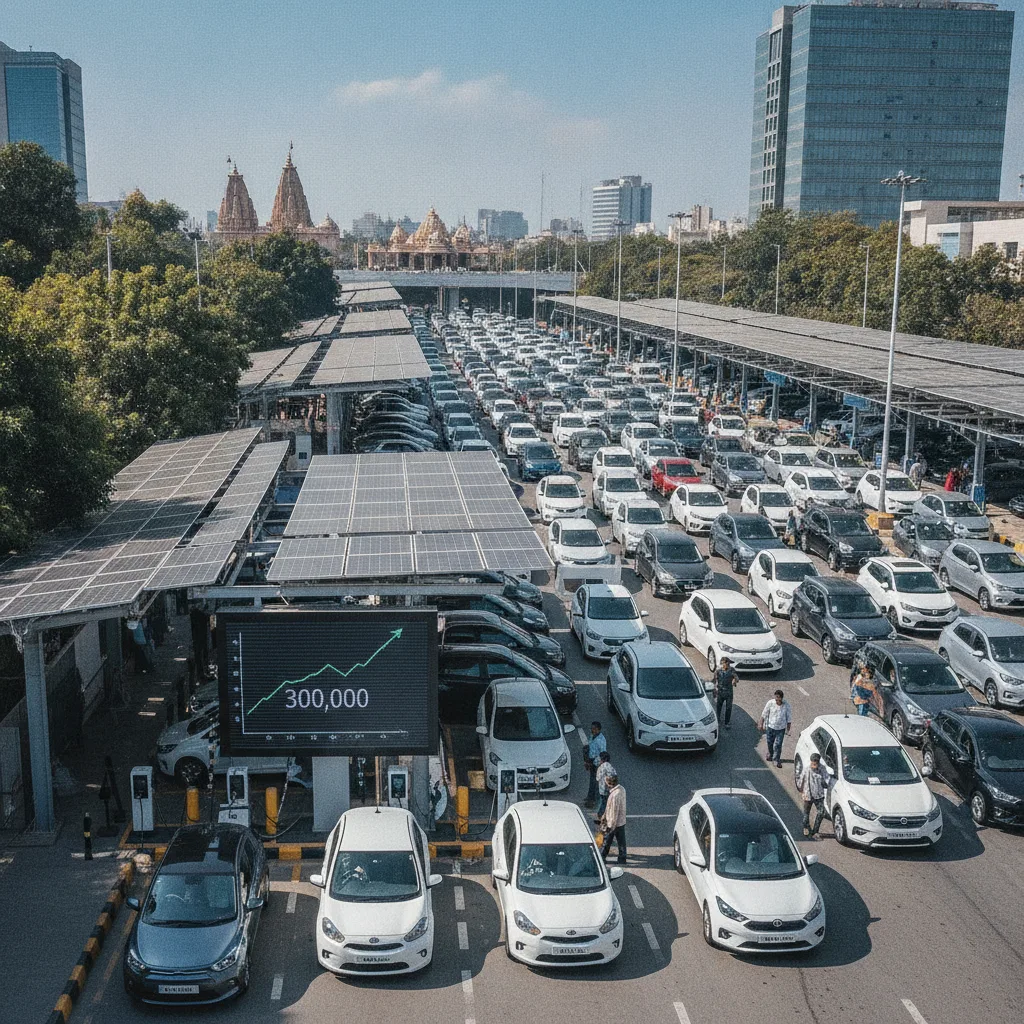
India's electric passenger vehicle market is shifting into high gear. Sales could cross 300,000 units by 2026, according to a recent analysis reported by The Times of India. That would be more than double the 1.2 lakh electric cars sold in 2023.
The jump is not just a number. It signals a real change in how Indians buy cars. More models are hitting showrooms. Prices are dropping. Charging points are popping up in more cities. And buyers are starting to see EVs as a practical choice, not just a novelty.
Government policy has helped push things along. The Faster Adoption and Manufacturing of Electric Vehicles scheme, or FAME, offers buyers a discount. States like Delhi, Maharashtra, and Gujarat have their own incentives too. Lower road taxes and registration fees make electric cars cheaper upfront.
But hurdles remain. Charging infrastructure is still thin outside big cities. Many apartments lack chargers. Range anxiety, the fear of running out of battery, keeps some buyers away. And while prices have fallen, electric cars still cost more than petrol or diesel models of the same size.
Carmakers are betting that will change. Tata Motors leads the pack with its Nexon EV and Tiago EV. MG Motor sells the ZS EV and Comet. Mahindra is rolling out new electric SUVs. BYD and Hyundai are also in the game. More competition means more choices, and lower prices.
Battery costs are the key. Lithium-ion cells make up roughly 40 percent of an EV's price. Global prices for these batteries have been falling for years. Analysts expect that trend to continue. If battery costs drop another 20 percent by 2026, electric cars could reach price parity with petrol cars.
That would be a game changer. India's car market is price sensitive. Most buyers spend between Rs 8 lakh and Rs 15 lakh on a new car. Right now, most electric models sit at the top of that range or above. Bringing down the entry price could unlock mass demand.
What the numbers say
The 3-lakh figure is a projection, not a guarantee. It depends on several things: battery prices, government support, charging infrastructure, and buyer confidence. But the direction is clear. Sales of electric passenger vehicles in India grew by over 90 percent in 2023 compared to 2022. That kind of growth, if sustained, makes 300,000 by 2026 plausible.
For comparison, China sold more than 6 million electric cars last year. Europe sold about 2 million. India is still tiny in global terms. But the pace of growth here is among the fastest.
Ride-hailing companies are also driving demand. Uber and Ola have pledged to add thousands of electric cars to their fleets. Fleet buyers care about total cost of ownership, not just the sticker price. Lower running costs, electricity is cheaper than petrol, make EVs attractive for high-mileage use.
Still, the shift will not happen overnight. Petrol and diesel cars still dominate. They account for more than 95 percent of new car sales. But the needle is moving. Every year, electric cars take a bigger slice.
If sales hit 3 lakh in 2026, electric cars would make up roughly 8 to 10 percent of India's annual passenger vehicle market. That would put India on par with where Europe was a few years ago. And it would show that the transition to electric mobility is real, not just for the rich, but for a growing number of ordinary Indian buyers.
Comments
Be the first to comment.
Leave a comment