
High Fuel Prices Drive Indian EV Sales as Infrastructure Hurdles Remain
Rising petrol costs push Indian commuters toward electric models, but a lack of public chargers and high upfront prices slow down the transition.
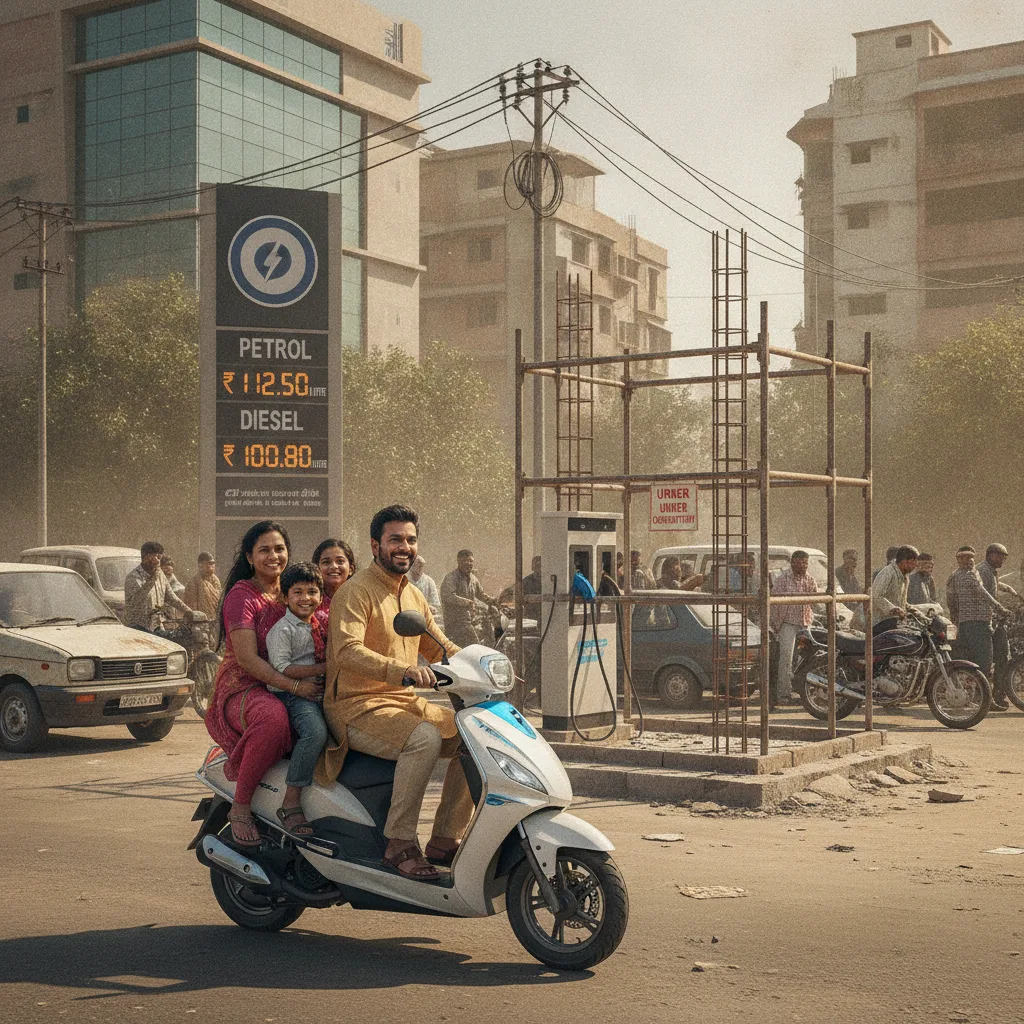
Petrol prices are high. In many Indian cities, fuel costs more than 100 rupees per litre. This pain at the pump is forcing a shift in how Indians travel. More drivers are buying electric vehicles to escape high running costs.
The shift is loudest in the two-wheeler and three-wheeler markets. Electric scooters and auto-rickshaws lead the charge. Sales of these vehicles have grown quickly because they are cheaper to run than petrol models. Delivery workers and daily commuters are making the switch first. They find that charging an e-scooter at home costs a fraction of a tank of petrol.
The Infrastructure Gap
Yet serious hurdles remain for the Indian EV market. The biggest problem is the lack of public charging stations. Drivers worry about running out of power on longer trips. This range anxiety keeps many buyers from choosing electric cars. Most EV owners currently charge their vehicles at home, but this is only an option for people with dedicated parking spaces.
Apartment buildings in crowded cities rarely have charging points. Public chargers are hard to find on highways and in smaller towns. Without a wide network of fast chargers, long-distance EV travel remains difficult. The country needs to build thousands of new stations to make drivers feel safe.
High Upfront Costs
Price is another barrier. Electric cars in India cost much more than their petrol equivalents. While running costs are lower, the initial purchase price is too high for the average middle-class family. Battery technology remains expensive. Most of these batteries rely on imported cells, which keeps prices high.
The government offers subsidies under the FAME scheme to make EVs cheaper. These incentives help lower the price of two-wheelers and three-wheelers. But the subsidies for passenger cars are limited. Many buyers still choose petrol, diesel, or compressed natural gas models because they cost less upfront.
Safety and Power Grid Concerns
Safety has also emerged as a worry. Reports of battery fires in electric scooters have made some buyers cautious. Extreme summer heat in India puts extra stress on EV batteries. Manufacturers are working to build better thermal management systems to keep batteries cool.
At the same time, the power grid must grow to support millions of new EVs. Most of India's electricity still comes from coal. If the country uses dirty power to charge clean cars, the environmental benefits shrink. The government plans to add more renewable energy to the grid to solve this problem. India wants electric vehicles to make up 30 percent of private car sales by 2030.
Comments
Be the first to comment.
Leave a comment