
Hybrid solar-storage projects win more bids in India's power auctions
A growing share of India's renewable energy auctions is going to hybrid solar projects paired with battery storage, signaling a shift in how the country builds its clean power fleet.
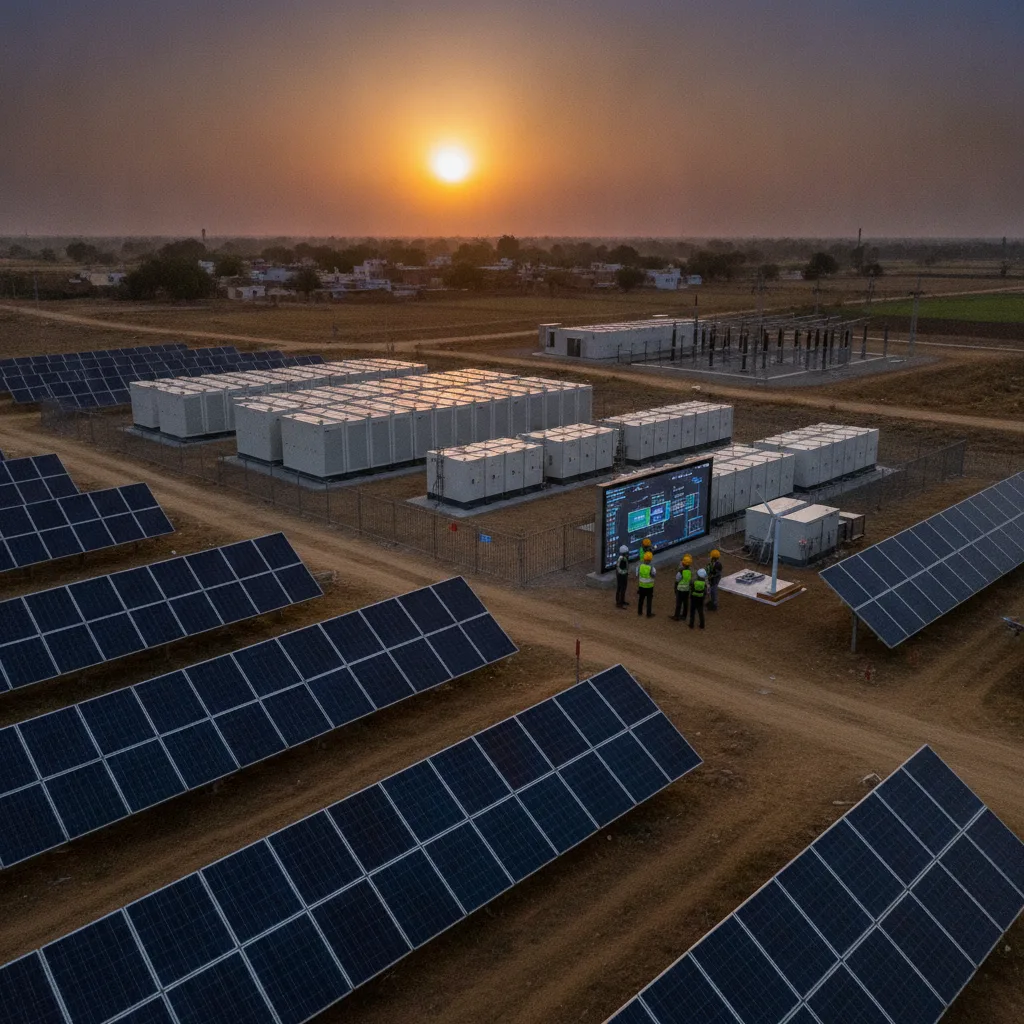
India's power auctions are seeing a steady rise in hybrid solar-storage projects. These deals, which pair solar panels with battery systems, now make up a bigger slice of the country's renewable energy tenders.
Data from Asian Power shows that hybrid solar-storage wins have grown in recent auctions. The trend points to a changing market where developers are no longer bidding on solar alone. Instead, they are offering power that can be stored and dispatched when the sun is not shining.
This matters for India's grid. The country aims to hit 500 gigawatts of renewable capacity by 2030. But solar power is intermittent, it stops generating at night and drops during cloudy weather. Adding batteries solves that problem. It lets project owners store daytime electricity and sell it during evening peak hours when prices are higher.
The shift is also driven by falling battery costs. Lithium-ion pack prices have dropped sharply over the past decade. That makes hybrid projects more competitive against coal-fired power, which still dominates India's grid.
State-run agencies like Solar Energy Corporation of India and NTPC have run several auctions that specifically ask for hybrid bids. In some cases, they require a minimum storage duration, often two to four hours. Developers respond by bundling solar farms with battery banks.
One example is a recent auction by SECI for 1.2 gigawatts of round-the-clock renewable power. Winners included companies that proposed solar-storage hybrids. These projects will supply electricity at all hours, not just during daylight.
The move toward hybrids also helps state electricity boards. Many state discoms are cash-strapped and struggle to manage grid stability. A hybrid plant offers a steady power flow, reducing the need for costly backup from coal or gas plants.
Still, challenges remain. Battery storage adds upfront cost. Developers need long-term power purchase agreements to recover that investment. Some states have been slow to sign such deals. Financing can also be tricky, lenders are still getting comfortable with storage technology.
Despite these hurdles, the auction data shows a clear direction. Hybrid solar-storage is not a niche experiment anymore. It is becoming a standard part of India's clean energy procurement.
The trend could accelerate if the government introduces a national storage mandate or offers incentives for battery manufacturing. India already has a production-linked incentive scheme for advanced chemistry cells. That program aims to build a domestic battery supply chain and cut reliance on imports.
For now, the numbers speak for themselves. In the last two fiscal years, hybrid projects accounted for a larger share of auctioned capacity than in any previous period. Analysts expect that share to keep growing as more states set renewable targets and as coal plant retirements pick up.
The bottom line: India is building a power system that can store its own sunshine. That shift is happening one auction at a time.
Comments
Be the first to comment.
Leave a comment