
India Could Save Rs 1 Lakh Crore on Oil Imports by 2030 with EVs: SBI Report
A new State Bank of India report projects that aggressive electric vehicle adoption could slash India's crude oil import bill by Rs 1 lakh crore within this decade.
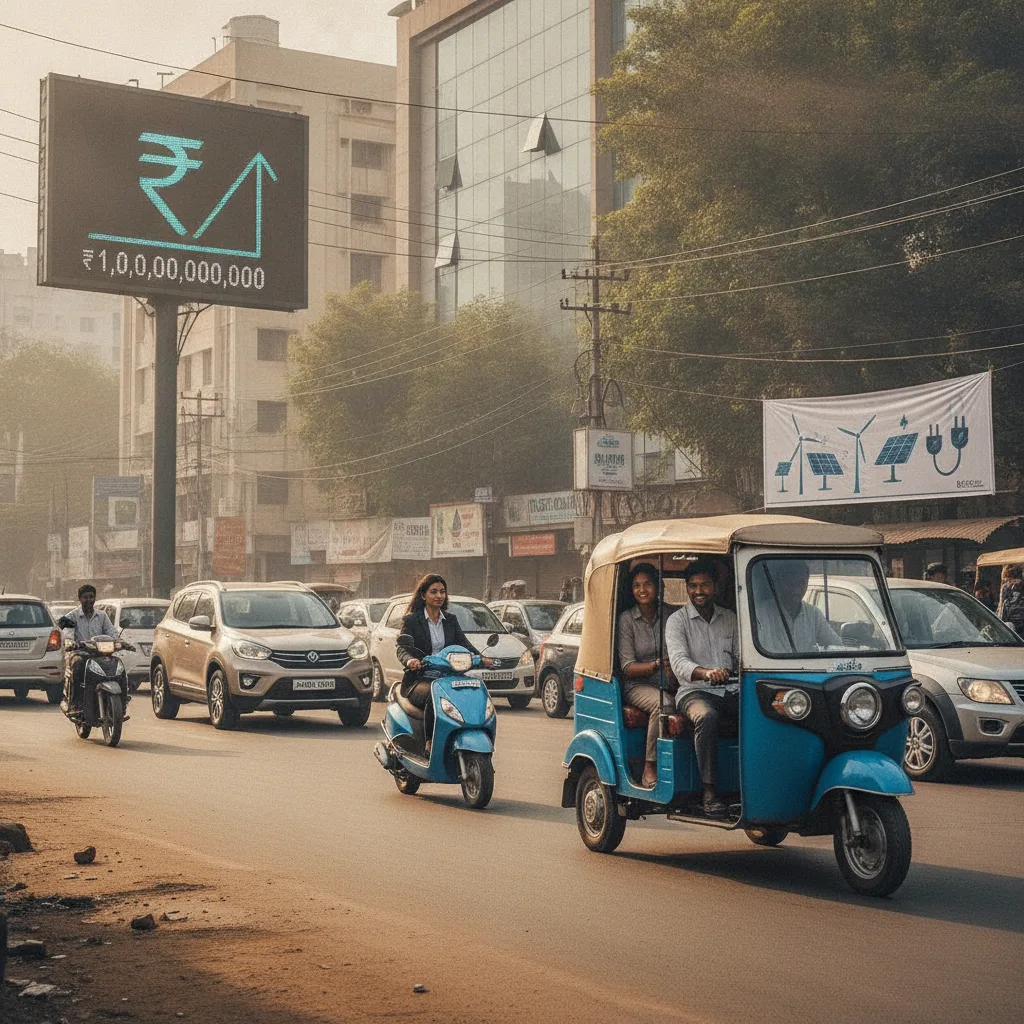
India could save Rs 1 lakh crore on crude oil imports by 2030 if it pushes ahead with electric vehicle adoption, according to a new report from the State Bank of India. The finding, reported by Open Magazine, comes as the country looks to cut its dependence on foreign oil and meet its climate goals.
The SBI study models two scenarios. In the first, a moderate uptake of EVs leads to savings of roughly Rs 50,000 crore. In the more aggressive scenario, with faster adoption of electric cars, buses, and two-wheelers, the savings double to Rs 1 lakh crore.
India imports about 85% of its crude oil needs. That bill has strained the country's foreign exchange reserves and left it exposed to global price shocks. The Russia-Ukraine war sent oil prices soaring in 2022, pushing India's import bill to a record $210 billion.
Transport accounts for roughly 40% of India's oil demand. Electrifying that sector, the report argues, is one of the fastest ways to cut consumption. The savings would come from replacing petrol and diesel with domestically generated electricity.
The report does not specify which EV segments would drive the biggest savings. But analysts point to two-wheelers and three-wheelers, which already show strong adoption rates. Electric two-wheelers made up about 5% of new sales in 2023, while e-rickshaws have become common in many cities.
India's EV push faces real hurdles. Charging infrastructure remains patchy. A 2023 survey by the Federation of Indian Chambers of Commerce and Industry found that 70% of potential EV buyers cite range anxiety and lack of chargers as their top concerns. Battery costs, though falling, still make EVs pricier upfront than petrol models. The government's Faster Adoption and Manufacturing of Electric Vehicles (FAME) scheme has helped, but subsidies remain limited.
Still, the SBI report suggests the payoff could be enormous. A Rs 1 lakh crore saving would be roughly 0.4% of India's current GDP. That money could flow into other parts of the economy, or help the government narrow its fiscal deficit.
The report also notes that lower oil imports would improve India's trade balance. The country's trade deficit hit $265 billion in 2022-23, with oil making up a big chunk of that gap. Cutting imports by Rs 1 lakh crore would trim that deficit by nearly 6%.
Other countries have moved faster. China sold 5.7 million EVs in 2022, compared to India's 1 million. But India's market is growing. Sales of EVs jumped 50% in 2023 from the year before, driven largely by two-wheelers and three-wheelers.
The SBI report did not set a timeline for when the aggressive adoption scenario might become reality. It said the savings depend on policy support, battery price drops, and charging infrastructure build-out. The government has set a target of 30% EV sales for private cars and 80% for two- and three-wheelers by 2030.
For now, the numbers offer a clear incentive. A Rs 1 lakh crore saving on oil imports is a prize worth chasing.
Comments
Be the first to comment.
Leave a comment