
India's EV boom exposes widening skills gap; 2 lakh jobs at risk by 2030
A Fortune India report warns that India's electric vehicle surge could leave up to 200,000 professional roles unfilled by 2030 without urgent training and retooling.
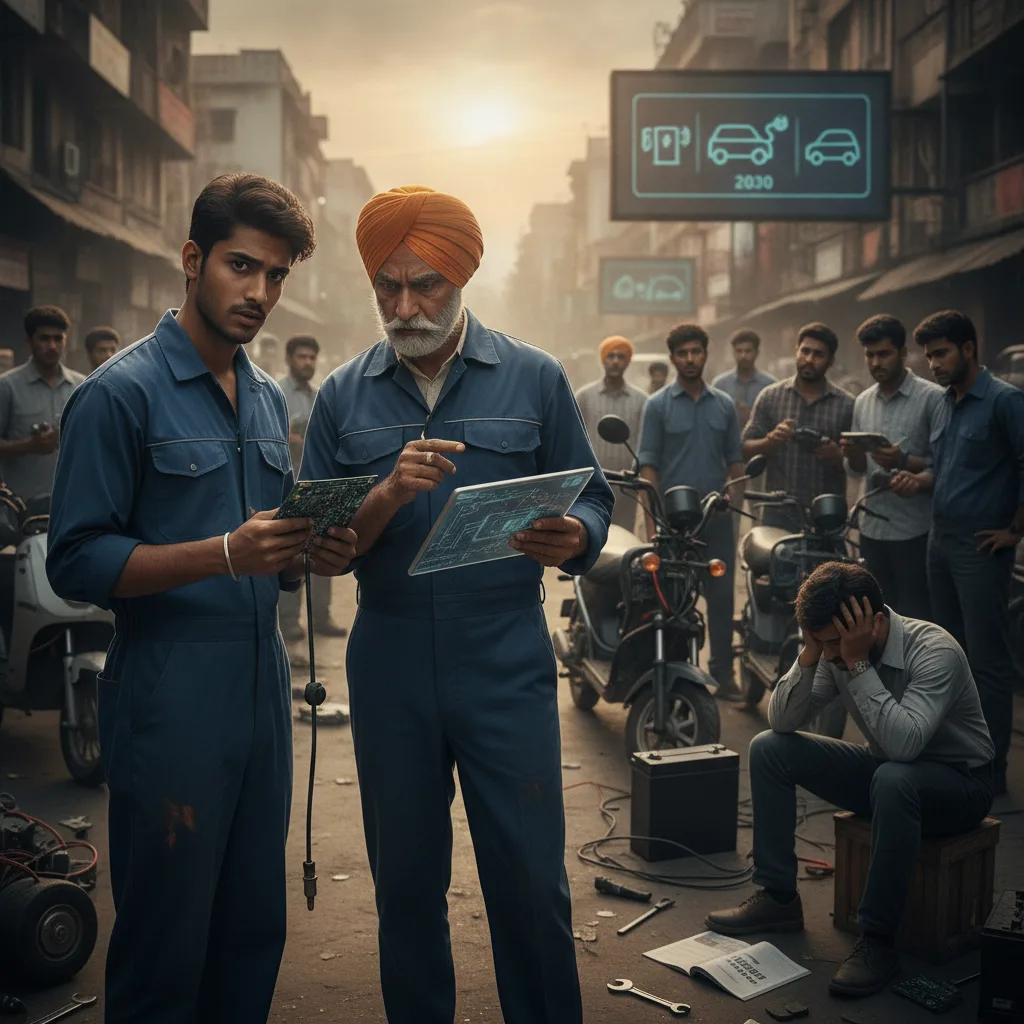
India's electric vehicle market is racing ahead. But the workforce needed to build, service, and support those vehicles is falling behind. A new report from Fortune India warns the sector may need up to 2 lakh professionals by 2030, and the gap is already showing.
The problem is not just about numbers. It is about skills. The EV industry demands a very different set of abilities compared to traditional internal combustion engine manufacturing. Battery chemistry, power electronics, motor design, and software integration are now core requirements. Most of India's current automotive workforce, estimated at around 5 million people, lacks training in these areas.
Fortune India's analysis points to a mismatch between what colleges and training institutes produce and what EV companies actually need. Engineering graduates often have theoretical knowledge but little hands-on experience with high-voltage systems or lithium-ion battery packs. Diploma holders and ITI graduates, who form the backbone of auto manufacturing, are even less prepared.
Where the gaps are worst
The report identifies three critical areas of shortage:
- Battery technology: From cell manufacturing to battery management systems, skilled workers are scarce. India currently imports most of its battery cells, but local production plans require a trained workforce.
- Power electronics and motor design: Engineers who can design and test inverters, converters, and electric motors are in high demand. Few institutes offer specialized courses.
- Service and aftermarket: Mechanics trained on petrol and diesel engines cannot simply switch to EVs. High-voltage safety, diagnostic software, and battery repair are new skills. The report estimates that by 2030, India will need over 1.5 lakh trained service technicians alone.
Some companies are already feeling the pinch. Tata Motors, Ola Electric, and Mahindra & Mahindra have all expanded hiring, but they report difficulty finding candidates with the right skill sets. Startups in the EV charging and battery-swapping space face similar problems.
Policy and industry response
The government has taken some steps. The Ministry of Skill Development and Entrepreneurship launched a 'Skill India' program for EVs in 2021, aiming to train 1 lakh people over five years. The Automotive Skills Development Council has also introduced new course modules. But Fortune India notes that the pace of training is far behind the pace of industry growth.
Industry bodies have called for a more coordinated approach. They want tax breaks for companies that set up in-house training centers, partnerships between EV makers and engineering colleges, and a national certification system for EV technicians. Without these measures, they argue, the skills gap will only widen.
There is a geographic dimension too. Most EV manufacturing and R&D is concentrated in a few states, Tamil Nadu, Maharashtra, Karnataka, and Gujarat. Workers in other states may need to relocate, which adds cost and friction. The report suggests that decentralized training hubs could help spread opportunities more evenly.
The clock is ticking. India's EV market is projected to grow at a compound annual rate of over 40% through the end of this decade. If the workforce does not keep up, the boom could hit a wall, not because of demand or investment, but because of a shortage of people who know how to make, fix, and improve the vehicles.
Fortune India's report makes one thing clear: the race to electrify India's roads will be won or lost in the classroom and the workshop, not just on the factory floor.
Comments
Be the first to comment.
Leave a comment