
India's solar capacity hits nearly 136 GW, says Union Minister Pralhad Joshi
Union Minister Pralhad Joshi announced that India's installed solar power capacity has reached nearly 136 gigawatts, marking a major step toward the country's 2030 renewable energy target.
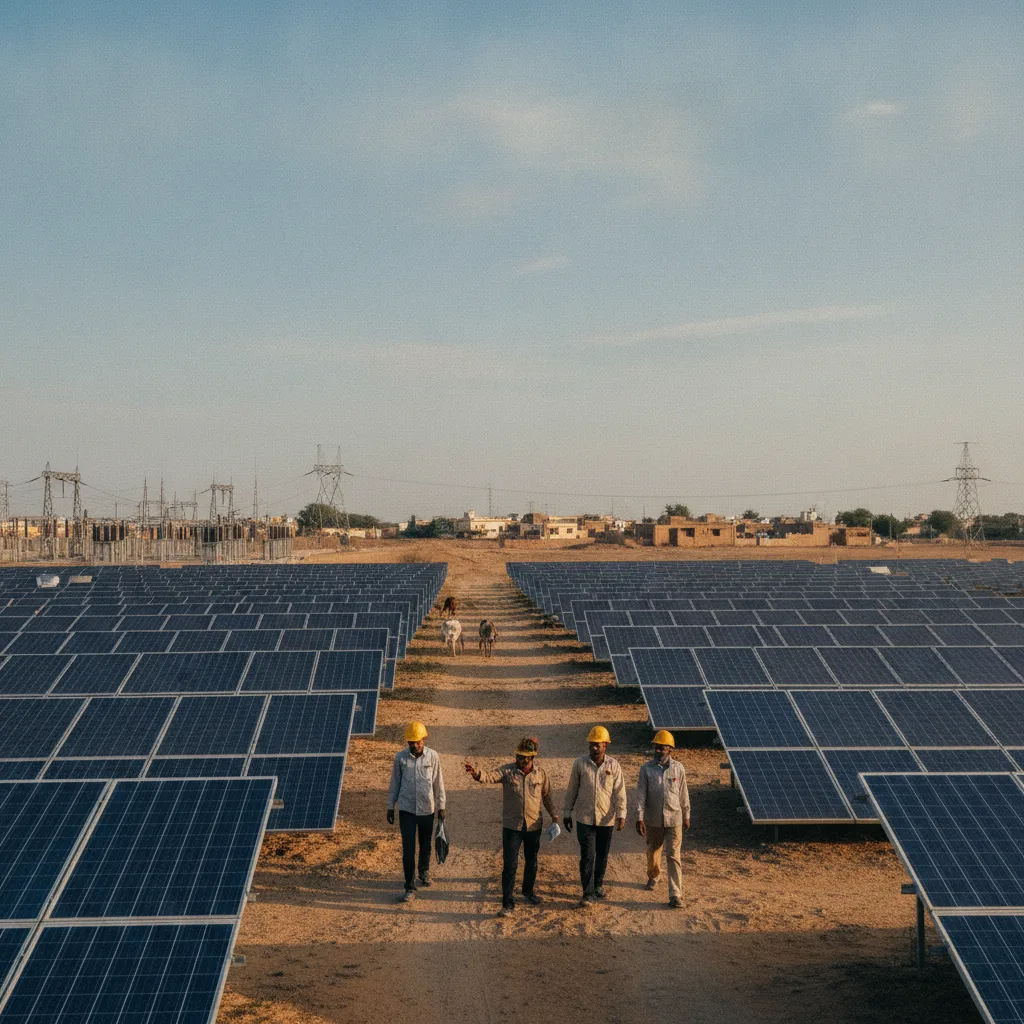
India's installed solar power capacity has crossed the 136-gigawatt mark, Union Minister for New and Renewable Energy Pralhad Joshi said on Monday. The announcement came during a press briefing in New Delhi, where Joshi outlined the government's progress on clean energy goals.
"Our installed solar capacity now stands at nearly 136 GW," Joshi told reporters. He credited the growth to a mix of policy support, falling equipment costs, and aggressive state-level deployment. The figure includes both utility-scale solar parks and rooftop installations.
India has set a target of 500 GW of non-fossil fuel capacity by 2030. Solar is expected to provide the bulk of that, roughly 280 GW. The current tally puts the country well ahead of its earlier 2022 goal of 100 GW of solar, though that target was missed by a small margin due to supply chain disruptions and land acquisition delays.
Rooftop solar still lags
While large-scale solar projects have surged, rooftop solar remains a weak spot. As of late 2024, rooftop capacity stood at just over 11 GW, far short of the 40 GW target set for 2022. The government recently launched a new scheme offering subsidies for residential rooftop systems, hoping to close that gap.
Joshi said the Ministry is working with state utilities to speed up approvals and net-metering connections. "We are simplifying the process for households," he said. "The response in states like Gujarat and Maharashtra has been encouraging."
Gujarat alone accounts for over 17 GW of installed solar capacity, followed by Rajasthan at 16 GW and Karnataka at 15 GW. These three states together make up more than a third of India's total solar capacity.
Manufacturing push
India has also ramped up domestic solar module production. The government's Production Linked Incentive (PLI) scheme for solar manufacturing has attracted investments worth more than ₹1.5 lakh crore. The goal is to reduce dependence on Chinese imports for cells and modules.
"We want to build a complete solar ecosystem, from polysilicon to modules," Joshi said. Several companies have announced plans to set up integrated manufacturing plants in Gujarat, Tamil Nadu, and Odisha.
India's solar module manufacturing capacity has jumped from about 10 GW in 2021 to over 50 GW now. But cell manufacturing capacity, a more technology-intensive step, remains lower at around 10 GW. The government has imposed a basic customs duty on imported modules to protect local producers.
Grid integration challenges
The rapid addition of solar power has created new problems for grid operators. Solar generation fluctuates with cloud cover and daylight hours, causing sudden swings in power supply. The Central Electricity Authority has warned that states need to invest in battery storage and flexible coal plant operations to manage these swings.
Joshi acknowledged the issue. "We are working on a storage obligation policy," he said. "Discoms will have to buy a certain share of their power from storage-backed renewable sources." The policy is expected to be finalised by mid-2025.
India's solar capacity addition has averaged about 15 GW per year over the last three fiscal years. To hit the 2030 target, that pace needs to nearly double to 25-30 GW annually. Industry analysts say the biggest hurdles remain land acquisition, transmission infrastructure, and the financial health of state distribution companies.
"The pipeline is strong," Joshi said. "We have projects worth 50 GW under various stages of construction. The momentum is there."
Comments
Be the first to comment.
Leave a comment