
India's Solar Push: Can Rooftop and Grid Projects Meet 2030 Goals?
A new report from Drishti IAS outlines India's solar roadmap, highlighting the need for faster rooftop adoption and grid upgrades.
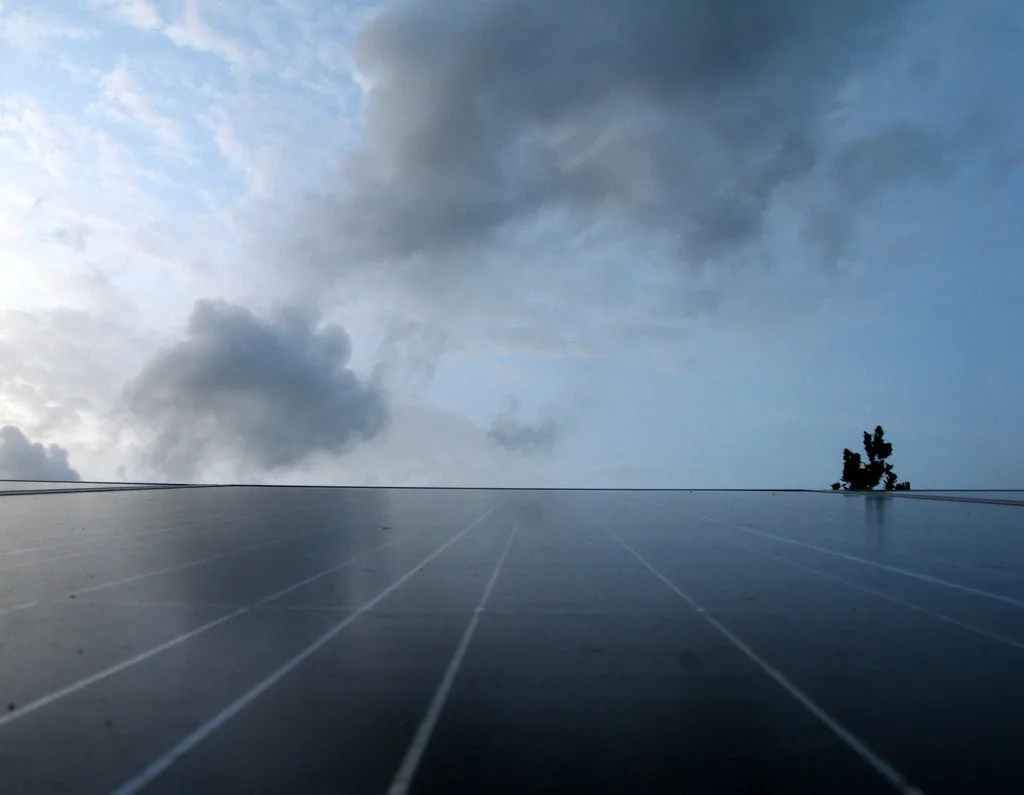
India wants 500 gigawatts of non-fossil fuel power by 2030. Solar is the big piece of that puzzle. But a new analysis from Drishti IAS, a well-known civil services coaching institute, says the country is not moving fast enough on rooftop solar.
The report, released this week, looks at India's solar journey so far. It points to the sharp drop in solar panel prices over the last decade. That has made utility-scale solar farms cheaper than coal in many parts of the country. Yet, the rooftop segment lags. As of mid-2026, India has installed about 15 GW of rooftop solar, far short of the 40 GW target set for 2022. The deadline has come and gone.
Why Rooftop Solar Stalls
Money is one issue. Many households cannot afford the upfront cost of panels, even with subsidies. The government's PM Surya Ghar scheme, launched in 2024, offers free electricity for up to 300 units a month. But adoption has been uneven. States like Gujarat and Maharashtra lead, while others lag.
Another problem is the grid. Rooftop solar pushes power back into the grid during the day. That can overload local transformers, especially in areas with old infrastructure. Discoms, the power distribution companies, are often reluctant to approve new connections. They worry about losing revenue from high-paying commercial and industrial customers.
There is also the issue of net metering rules. Some states have capped the size of rooftop systems or reduced the tariff paid for excess power. That makes the economics less attractive for homeowners.
Utility-Scale Solar: The Bright Spot
Large solar parks are doing better. India has built massive projects in Rajasthan, Gujarat, and Tamil Nadu. The Bhadla Solar Park in Rajasthan, for example, is one of the largest in the world, with a capacity of over 2.2 GW. These parks benefit from economies of scale and long-term power purchase agreements.
But even here, there are hurdles. Land acquisition is a slow process. Transmission lines from remote deserts to cities are costly and take years to build. The report notes that India needs to add about 25 GW of solar capacity every year until 2030 to meet its target. In 2025, the country added roughly 18 GW. That is a gap.
Storage and Manufacturing
Solar power is intermittent. The sun does not shine at night. So, India needs energy storage, batteries, pumped hydro, or other solutions. The government has pushed for mandatory storage in some new solar tenders. But storage costs remain high, though they are falling.
On the manufacturing side, India has ramped up domestic production of solar cells and modules. The production-linked incentive scheme has attracted investment. But the country still imports some key materials, like polysilicon, mostly from China. That is a supply chain risk.
What Needs to Happen
The Drishti IAS report offers a clear list of actions. First, simplify net metering rules and make them uniform across states. Second, strengthen the grid to handle more distributed solar. Third, provide low-interest loans for rooftop installations. Fourth, push for more storage capacity.
The report also calls for better data and monitoring. Right now, it is hard to track how much solar is actually being generated, especially on rooftops. A national database would help.
India's solar story is one of big wins and slow patches. The country has the sun, the land, and the falling costs. What it lacks is speed. The 2030 deadline is not far off. Every year of delay makes the target harder to hit.
Source: Drishti IAS · 5 Sep 2026
Comments
Be the first to comment.
Leave a comment