
India’s solar sector could supply Europe, says Renewables Norway CEO
The head of Renewables Norway sees India as a future solar exporter to Europe, citing low costs and manufacturing scale.
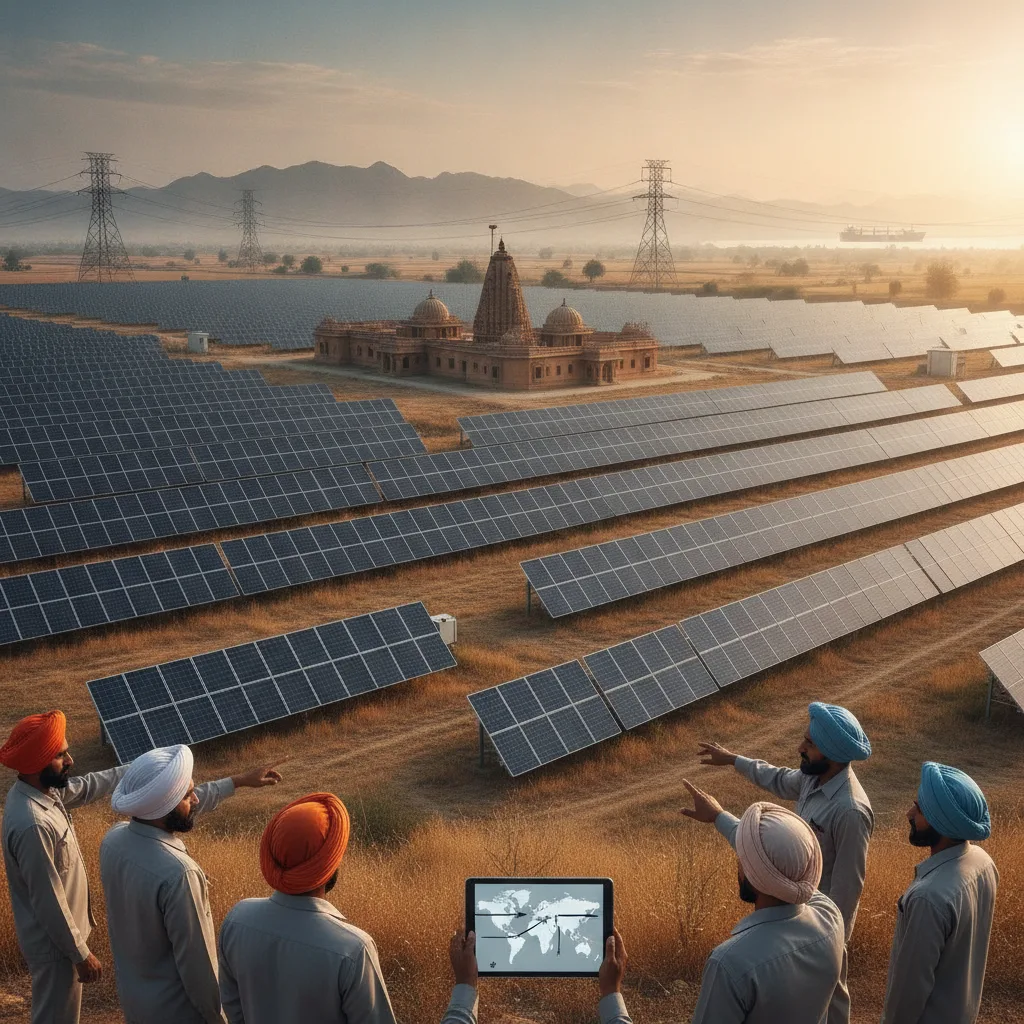
India's solar industry has a real shot at becoming a major exporter to Europe, according to the chief executive of Renewables Norway. Speaking to ET EnergyWorld, the CEO pointed to India's growing manufacturing base and competitive pricing as key advantages.
"There is a big opportunity for India in solar," the CEO said. "The country could become an exporter to Europe." The remarks come as European nations scramble to diversify their clean-energy supply chains away from China.
India already has one of the world's largest solar deployment programs. The government wants 500 GW of non-fossil fuel capacity by 2030, with solar playing the lead role. Domestic panel production is ramping up under the Production Linked Incentive (PLI) scheme, which aims to build 65 GW of solar module capacity annually.
Cost advantage and scale
Renewables Norway's CEO highlighted India's low manufacturing costs. Chinese modules still dominate global markets, but Indian factories are closing the gap. The CEO said Indian-made panels could be price-competitive in Europe, especially if the European Union imposes carbon border taxes on Chinese imports.
"India has the scale and the cost structure," the CEO added. "European buyers are looking for alternatives." Norway itself is a major renewable energy player, with vast hydropower and a growing offshore wind sector. But the country imports most of its solar panels. That could change if Indian suppliers step up.
The CEO did not give specific timelines or volume targets. But the message was clear: India should not just meet domestic demand. It should aim for export markets.
Policy and trade hurdles
India's solar export push faces real barriers. The EU has its own domestic manufacturing goals under the Net-Zero Industry Act. European producers want to keep a slice of the market. Trade rules could also slow things down. India is not part of the EU's free-trade agreements, so panels face duties that Chinese goods do not.
Still, the CEO said those hurdles are manageable. "If the price is right and the quality is there, buyers will come," he said. Indian companies like Adani Solar, Waaree, and Vikram Solar have already started exporting to the US and parts of Africa. Europe is the next logical step.
What it means for Norway
Renewables Norway represents companies that build and operate wind, solar, and hydropower plants. Its CEO said Norwegian firms are keen to partner with Indian manufacturers. That could mean joint ventures, technology transfers, or long-term supply deals.
Norway's sovereign wealth fund, the world's largest, has also been investing in Indian renewable energy projects. The fund put money into Greenko, a Indian clean-energy firm, and owns stakes in several solar developers.
"We see India as a long-term partner," the CEO said. "Not just a market, but a manufacturing hub."
Ground reality
India's solar exports are still small. In 2023, the country shipped about $1 billion worth of solar cells and modules. China exported $50 billion. But the gap is narrowing. India's PLI scheme has attracted $10 billion in investment. New factories in Gujarat, Tamil Nadu, and Uttar Pradesh are coming online.
Analysts say India could capture 10-15% of the European solar market by 2030 if policies align. That would mean annual exports of $5-7 billion. For a country that imports most of its oil, that kind of revenue matters.
"This is not a dream. It is a realistic goal," the Renewables Norway CEO said. "India just needs to keep building."
Comments
Be the first to comment.
Leave a comment