
India’s Solar Subsidy Scheme to End March 31, 2027
The Ministry of New and Renewable Energy confirms the subsidy scheme for solar installations will conclude in 2027.
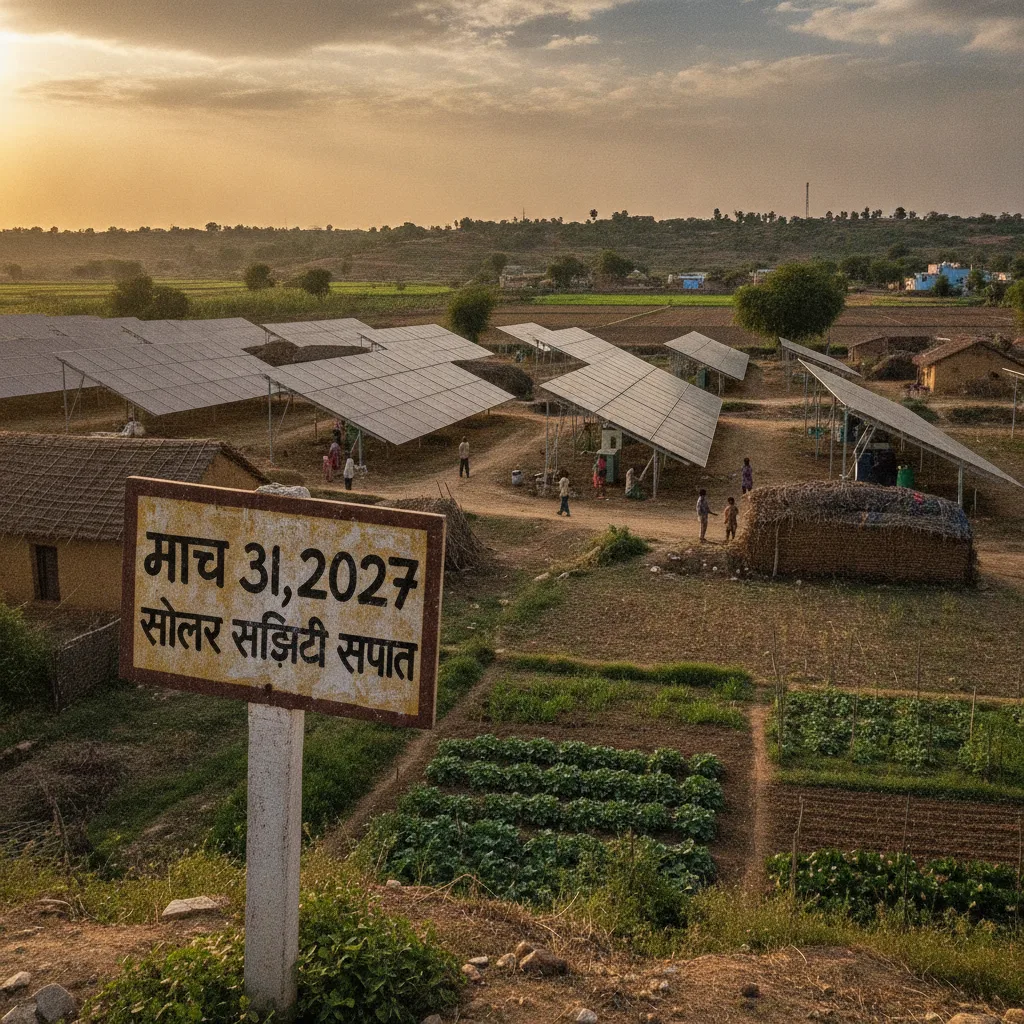
The Ministry of New and Renewable Energy (MNRE) has announced that India's subsidy scheme for solar power installations will end on March 31, 2027. The decision, confirmed in a recent update, provides clarity for stakeholders in the renewable energy sector.
What Does This Mean for Solar Adoption?
The subsidy scheme has been a key driver of solar adoption across India, particularly for residential and small-scale commercial projects. It offers financial support to reduce the upfront cost of solar installations, making renewable energy more accessible. With the scheme set to end in 2027, industry experts say there's a limited window for consumers and businesses to take advantage of these benefits.
"The subsidy has played a crucial role in accelerating solar adoption," said Ravi Shankar, a renewable energy consultant based in Delhi. "Its expiration could slow down growth unless alternative incentives are introduced."
Why March 2027?
The MNRE's decision aligns with India's broader renewable energy targets. The country aims to achieve 500 GW of installed renewable energy capacity by 2030, with solar power accounting for a significant portion. By setting a firm end date, the government hopes to encourage faster adoption while managing budgetary constraints.
"The 2027 deadline gives everyone a clear timeline to plan their investments," said an MNRE spokesperson. "It also ensures that the subsidy program remains sustainable."
Impact on the Solar Industry
The subsidy's expiration could lead to a surge in demand for solar installations in the coming years as consumers rush to secure financial support. However, industry leaders warn that the transition to a post-subsidy era will require innovative financing models and cost reductions.
"The industry needs to focus on making solar technology more affordable without subsidies," said Priya Mehta, CEO of a solar panel manufacturing company in Gujarat. "This includes improving efficiency and reducing production costs."
According to recent data, India's solar capacity has grown significantly in recent years, reaching over 70 GW as of 2023. The subsidy scheme has been instrumental in this growth, particularly in states like Rajasthan, Gujarat, and Karnataka.
What's Next?
While the subsidy scheme will end in 2027, the MNRE has hinted at exploring other policy measures to support renewable energy adoption. These could include tax incentives, low-interest loans, or performance-based rewards.
"The end of the subsidy doesn't mean the end of support for solar energy," said the MNRE spokesperson. "We're looking at new ways to keep the momentum going."
As the clock ticks toward 2027, stakeholders across the solar industry are gearing up for a new phase of growth and innovation.
Comments
Be the first to comment.
Leave a comment