
Madhya Pradesh opens solar parks, BESS plant in clean energy push
The state inaugurates 150 MW solar parks and a 40 MW battery storage system in Morena, marking a major step toward its 2030 renewable target.
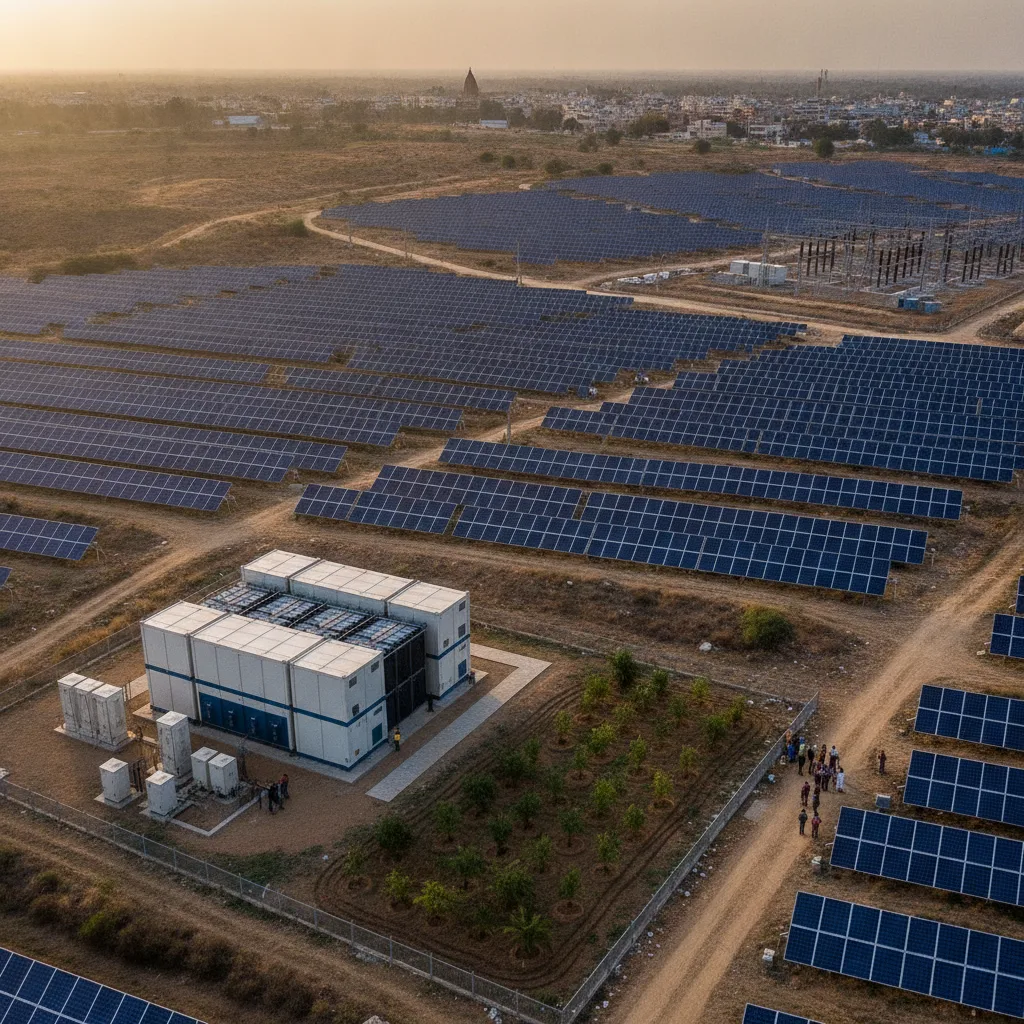
BHOPAL, Madhya Pradesh has taken a big leap in renewable energy. The state government this week inaugurated new solar parks and a battery energy storage system (BESS) in Morena district. Officials called it a historic step toward meeting the state's clean energy goals.
The projects include two solar parks with a combined capacity of 150 megawatts. The BESS plant, also in Morena, can store 40 megawatts of power. That storage will help steady the grid when the sun isn't shining.
State energy minister Pradyuman Singh Tomar spoke at the inauguration. He said the projects would cut carbon emissions and bring down power costs. "This is a milestone for Madhya Pradesh," he told reporters. "We are building a future that is both green and reliable."
The solar parks are spread across 500 acres of land. Developers used bifacial solar panels, which capture sunlight from both sides. That design boosts energy output by up to 30 percent compared to older panels.
Madhya Pradesh aims to install 20 gigawatts of renewable capacity by 2030. It already has about 6 GW online, mostly from solar. The new parks push that figure higher. The BESS project is the first of its kind in central India.
"Battery storage is the missing piece in India's renewable puzzle," said Ramesh Gupta, a senior official at the Madhya Pradesh Power Management Company. "Without it, solar and wind can't replace coal fully."
The BESS plant uses lithium-ion batteries. It can discharge power for up to four hours at full capacity. That covers evening peak demand, when solar output drops. The system was built by a joint venture between state utility MPPMCL and a private firm.
Land acquisition for large solar projects has often sparked protests in India. But officials said local farmers were compensated well. Some farmers now lease their land to the solar parks and earn steady income.
The state also plans to add 500 MW of wind capacity in the next two years. Wind speeds in the Malwa region are strong enough for commercial turbines. That would diversify Madhya Pradesh's renewable mix, which is now heavily tilted toward solar.
Critics point out that coal still supplies over 70 percent of the state's electricity. The new projects chip away at that share, but slowly. Environmental groups said the state needs to speed up permits for renewable projects and upgrade transmission lines.
"The grid in rural areas is weak," said Sunita Verma, a researcher at the Energy and Resources Institute in Delhi. "Adding more solar and storage is good, but only if the power can reach homes and factories."
The state government has set aside ₹1,200 crore for renewable projects in this year's budget. It also offers subsidies for rooftop solar panels. More than 50,000 households have installed them so far.
Madhya Pradesh's solar parks and BESS plant are now feeding power into the central grid. The next step, officials said, is to build more storage and connect remote villages.
Comments
Be the first to comment.
Leave a comment