
Mahindra Narrows EV Gap with Tata as Hyundai Slips in India
A new report shows Mahindra closing in on Tata Motors in India's electric vehicle market, while Hyundai loses ground amid shifting competition.
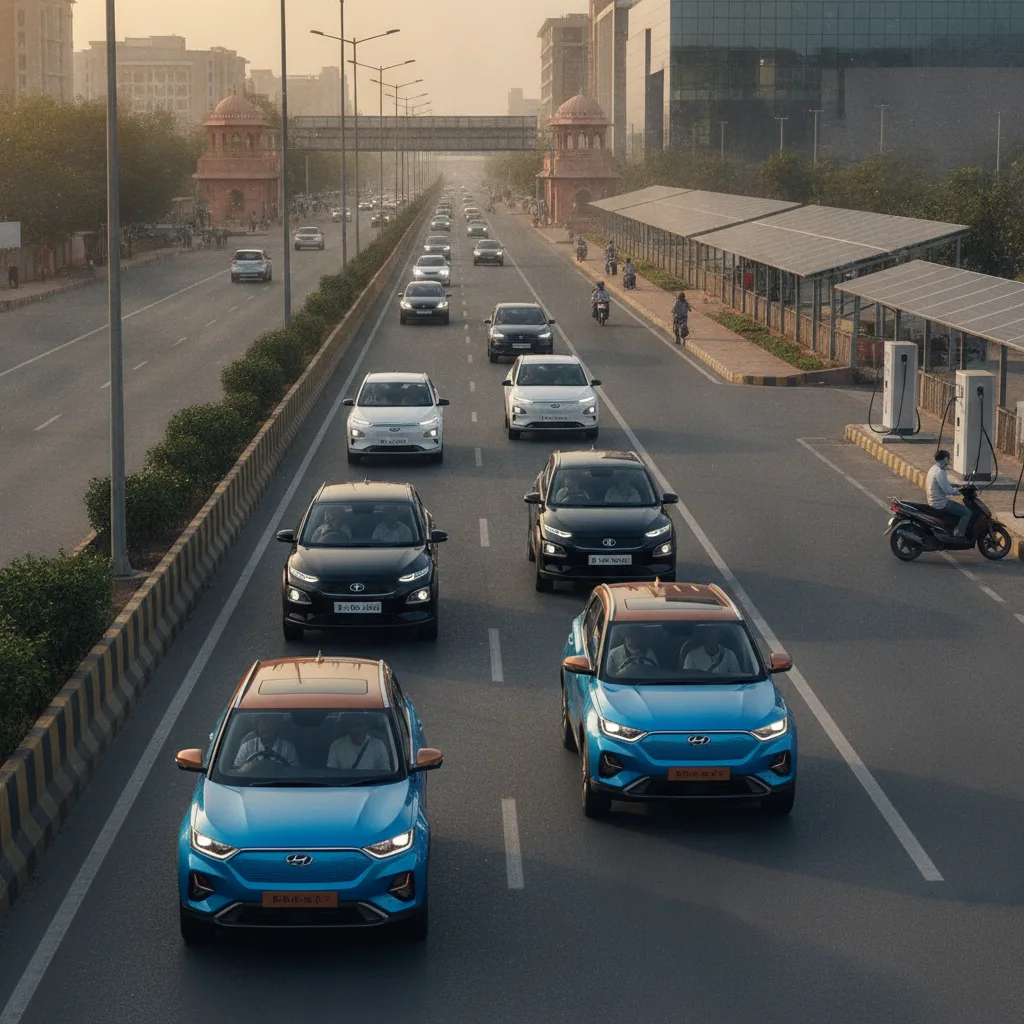
India's electric vehicle market is seeing a real shake-up. Mahindra & Mahindra is closing the gap with market leader Tata Motors, while Hyundai has lost ground. That's the takeaway from a new report by Open Magazine.
For years, Tata Motors has dominated India's EV space. Its Nexon EV and Tiago EV have been top sellers. But now Mahindra is catching up fast. The company's XUV400 electric SUV is gaining traction.
Hyundai, once a strong No. 2, is slipping. Its Kona Electric and Ioniq 5 haven't matched the sales momentum of its rivals. The Korean automaker now faces a tougher fight.
The report points to a few reasons for the shift. Mahindra has priced its EVs aggressively. It has also expanded its charging network and service centers. Tata still leads, but its share is shrinking.
Numbers tell the story. In 2023, Tata held roughly 70% of India's EV market. Mahindra had around 10%. By early 2024, Mahindra's share had climbed to nearly 20%. Tata's share dropped to about 65%. Hyundai fell from 15% to under 10%.
This is a fast-moving market. New models are coming from all sides. MG Motor, BYD, and Citroen are also pushing in. Even legacy automakers like Maruti Suzuki plan to launch EVs soon.
Mahindra's strategy is clear: build affordable electric cars with solid range. The XUV400 offers over 300 km on a single charge. That puts it in direct competition with Tata's Nexon EV.
Hyundai's slip is notable. The company has been slow to bring new EV models to India. Its Kona Electric is older and less competitive on price. The Ioniq 5, launched in late 2023, sits in a premium segment with limited buyers.
Government policy is also a factor. India's FAME II subsidy scheme has boosted EV adoption. But the scheme is set to end in March 2024. A new policy, expected later this year, could change the game again.
Charging infrastructure remains a bottleneck. India has about 5,000 public charging stations. That's far below what's needed for mass adoption. Both Tata and Mahindra are investing in charging networks. Tata Power runs over 4,000 chargers. Mahindra has partnered with ChargeZone and others.
Battery costs are another key. Lithium-ion prices have fallen sharply in the past year. That has helped automakers cut EV prices. Tata's Tiago EV starts at around Rs 8.5 lakh. Mahindra's XUV400 starts at Rs 15.5 lakh. Hyundai's Kona starts at Rs 23.8 lakh.
The battle is not just about cars. It's about brand perception, service, and trust. Tata has built a reputation for reliable EVs. Mahindra is pushing its rugged, SUV image. Hyundai is known for tech features but has yet to win over EV buyers.
What happens next? More competition is certain. Tata has new models in the pipeline, including the Harrier EV. Mahindra is working on the XUV.e8 and BE.05. Hyundai plans to launch the Creta EV by 2025.
For now, the gap is closing. Tata is still on top, but Mahindra is right behind. Hyundai needs a strong comeback or it could fall further behind.
Comments
Be the first to comment.
Leave a comment