
Policy Gaps Stunt India's Solar Ambitions as Targets Slip
A new analysis points to inconsistent policies, grid integration woes, and land acquisition hurdles as key brakes on India's solar energy growth.
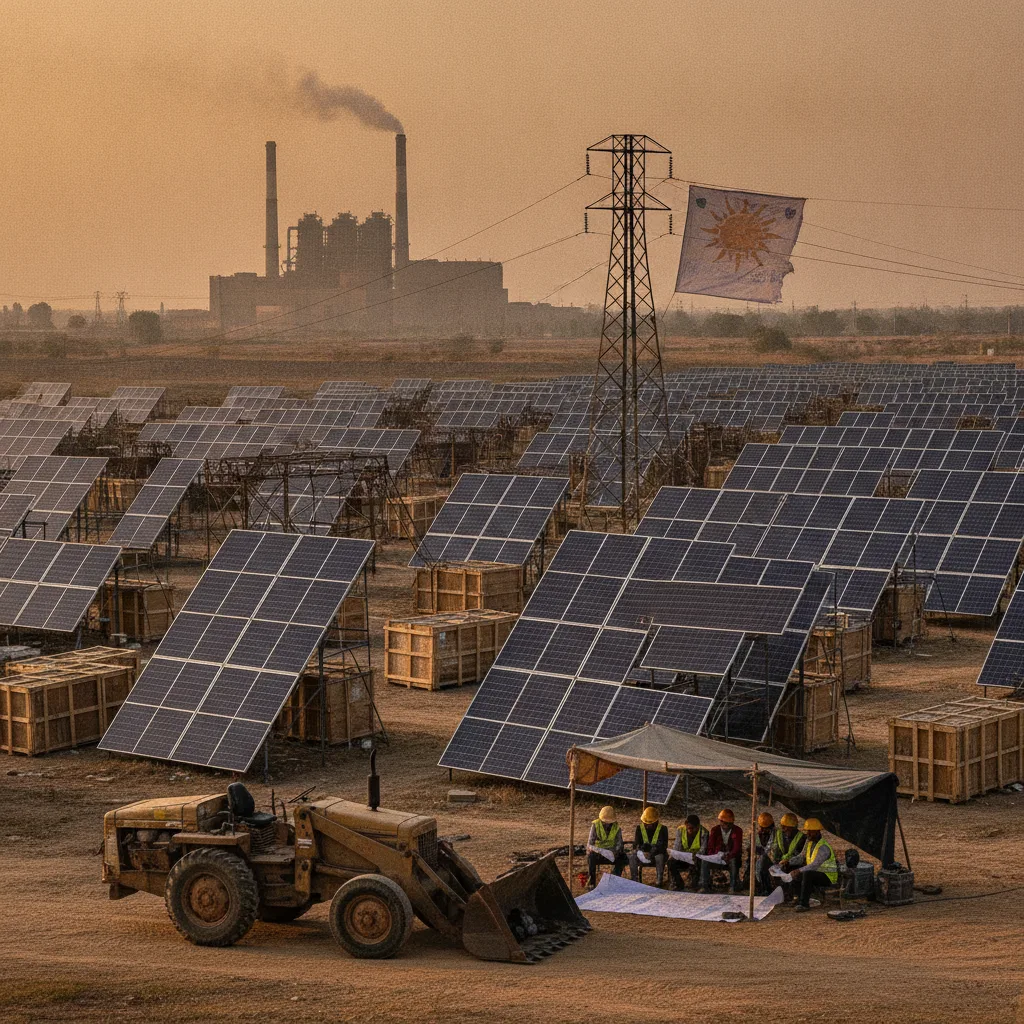
India wants 500 GW of renewable energy by 2030. Solar is supposed to do the heavy lifting. But the sector is stumbling, and policy failures are a big reason why.
A recent report from TheWire.in lays out the problems. The central government's solar targets keep shifting. States change rules mid-stream. Developers say they cannot plan ahead.
Take the Approved List of Models and Manufacturers, or ALMM. It was meant to boost domestic solar panel production. Instead, it caused supply shortages. The government suspended the order in early 2023. Then it brought it back in 2024. That kind of flip-flop spooks investors.
Grid connectivity is another mess. Solar plants in Rajasthan and Gujarat often get curtailed. The transmission network cannot handle the power. Discoms, already cash-strapped, refuse to buy solar power at agreed tariffs. They renegotiate or delay payments. That kills project finance.
Land acquisition remains a nightmare. Solar farms need large tracts. But land records are unclear. Farmers demand high prices. Local opposition stalls projects. The government has no clear policy to resolve these disputes.
Rooftop solar, meant to give households cheap power, has barely taken off. The target was 40 GW by 2022. India reached just 11 GW. Subsidies are slow to reach consumers. Net metering rules vary by state. Some states cap rooftop capacity. Others add charges that make solar less attractive.
Then there is the issue of solar waste. Old panels pile up. India has no recycling mandate. The draft rules from 2022 are still pending. Toxic materials could leach into the soil.
The Ministry of New and Renewable Energy says it is working on fixes. It points to the Production Linked Incentive scheme for solar cells and modules. But that scheme has seen delays in disbursal. Only a fraction of the allocated funds have reached manufacturers.
State governments add their own hurdles. Andhra Pradesh signed power purchase agreements in 2019, then tried to renegotiate them. Developers took the state to court. The uncertainty scared away new bids. Tamil Nadu and Karnataka have similar stories.
The result: India added about 10 GW of solar in 2023. That is far short of the 30 GW-plus needed each year to hit the 2030 target. The International Energy Agency warned last year that India's renewable rollout is off track.
Solar power is now cheaper than coal in many parts of India. The economics work. The policy does not. Until the government fixes land, grid, and tariff rules, the sector will keep underperforming.
Comments
Be the first to comment.
Leave a comment