SAEL Industries breaks ground on GW-scale solar factory in India
The new plant in Gujarat will make solar cells and modules, adding 3.2 GW of annual capacity as India pushes to build its own clean energy supply chain.
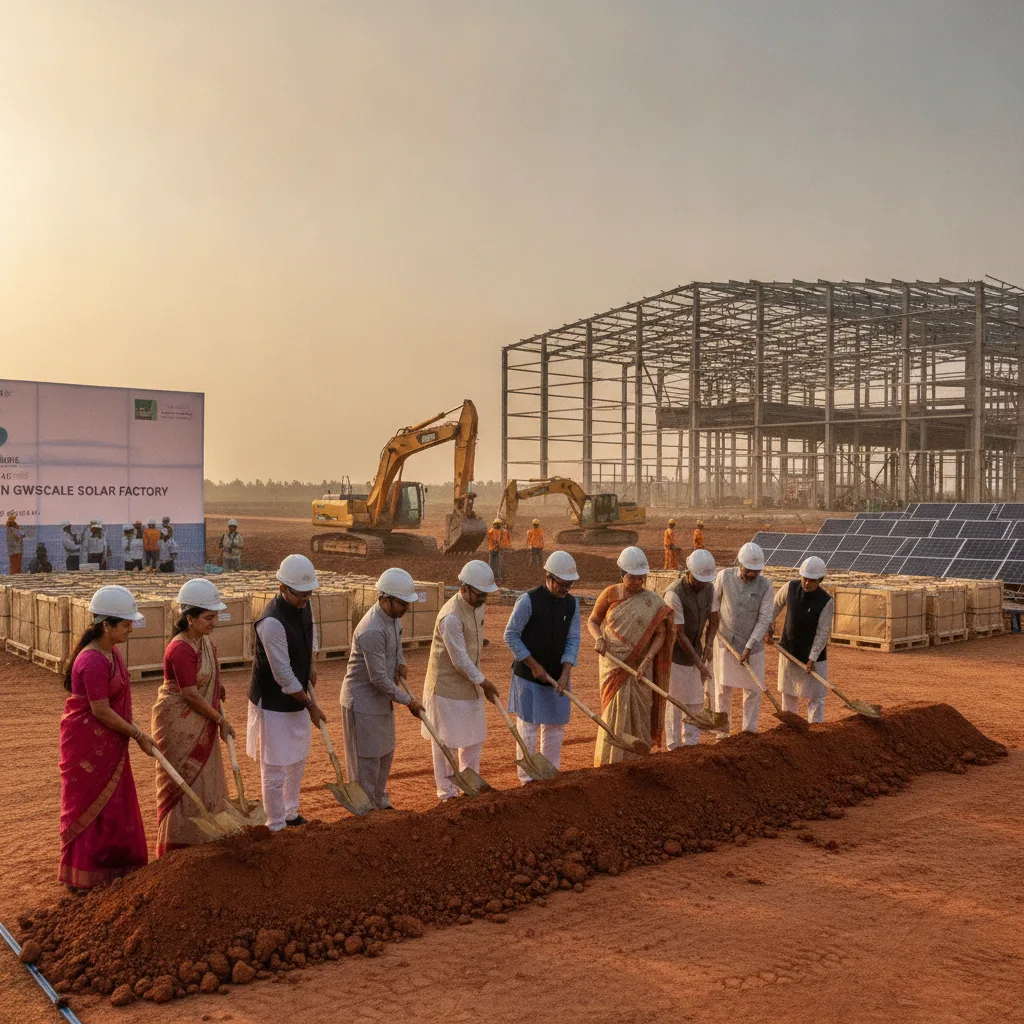
SAEL Industries has broken ground on a large solar factory in Gujarat. The facility will produce solar cells and modules at a gigawatt scale. It marks another step in India's push to manufacture its own clean energy equipment at home.
The plant is coming up at Dholera, a special investment region in Gujarat. SAEL says the factory will have an annual capacity of 3.2 GW. That covers both solar cells and solar modules under one roof.
Why this matters for India
India wants to add 500 GW of renewable energy by 2030. Solar is the biggest piece of that target. But for years, the country relied heavily on imports, mainly from China, for solar cells and panels.
The government has put policies in place to change that. It slapped a basic customs duty on imported solar modules and cells. It also launched a production-linked incentive (PLI) scheme for solar manufacturing. SAEL's new factory falls under that PLI scheme.
The company got the PLI nod for 3.2 GW of integrated solar manufacturing. The Dholera plant will meet that commitment. SAEL is not new to the power business. It started as a biomass power producer. Over time it moved into solar power projects. Now it is building its own factory to make the hardware those projects need.
What the factory will make
The plant will produce both solar cells and modules. Cells are the core of a solar panel. Modules are the finished panels that go on rooftops or in solar farms. Making both in the same factory cuts costs and reduces supply chain risks.
SAEL has not said when production will start. But the ground-breaking is a signal that the project is moving ahead. The company will likely need 12 to 18 months to build and commission the plant.
The Indian solar manufacturing sector is growing fast. A few years ago, the country had almost no cell making capacity. Today, several companies are building or expanding factories. Reliance Industries, Adani Solar, and Waaree Energies are all adding capacity. SAEL's entry adds to that list.
Challenges remain
Building a solar factory in India is not easy. The supply chain for raw materials like polysilicon and silver paste is still underdeveloped. Most of that stuff still comes from China. Indian makers also face competition from cheaper imports, though the government has tried to block those with tariffs and quality standards.
Another challenge is technology. Solar cell tech is moving fast. The world is shifting from older PERC cells to newer TOPCon and heterojunction cells. Indian factories need to stay current or risk making outdated products. SAEL has not disclosed which cell technology it will use at Dholera.
Still, the ground-breaking is a concrete step. The factory will create jobs in Gujarat. It will also help Indian solar developers buy panels made in India, which they need to do to qualify for certain government benefits.
The Dholera region is being built up as a manufacturing hub. It has good road and port connectivity. That matters for solar factories because they need to move heavy glass and finished panels cheaply.
SAEL's move shows that Indian companies are betting big on solar. The question now is whether they can build fast enough to meet the country's 2030 target.
Comments
Be the first to comment.
Leave a comment