
Tata, Mahindra lead India’s EV market as global rivals lag behind
A Moneycontrol report shows Tata Motors and Mahindra & Mahindra control most of India's mass electric car sales, while global automakers struggle to gain traction.
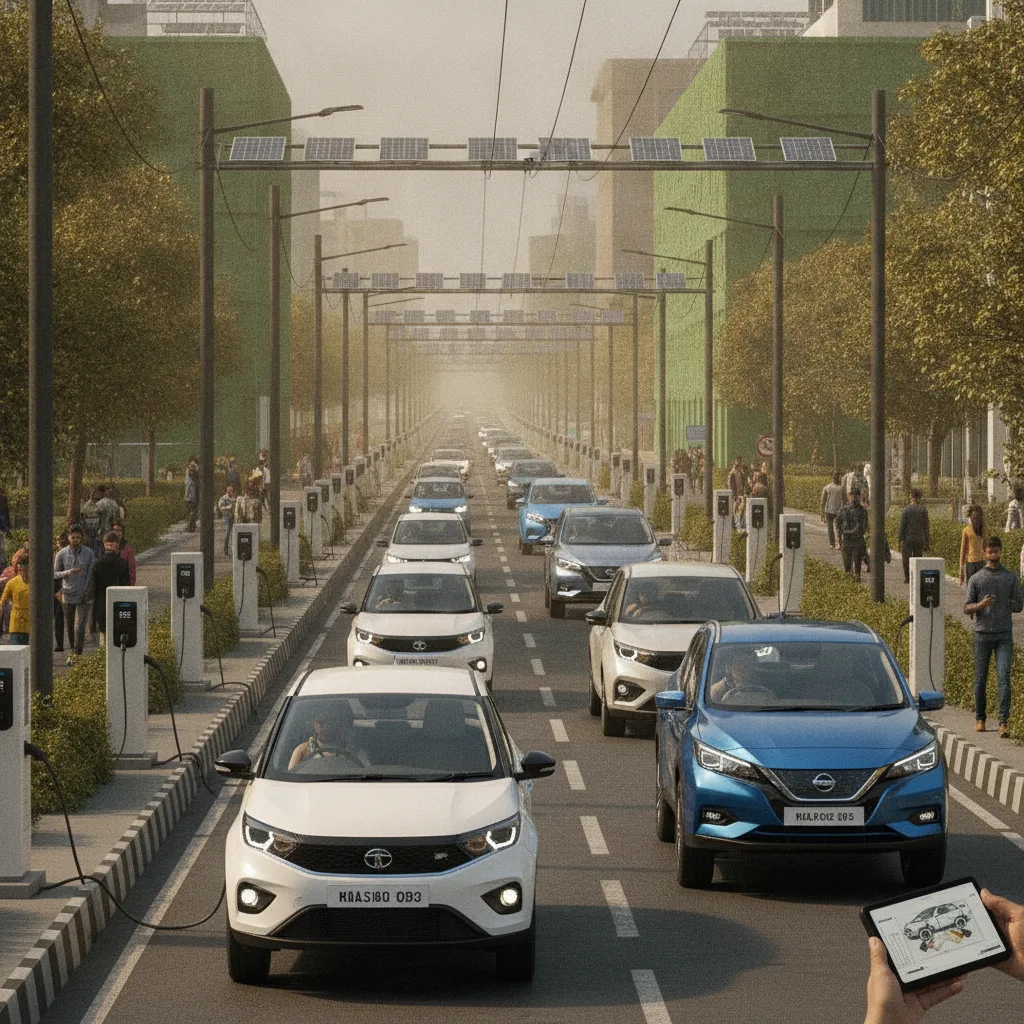
NEW DELHI, Two Indian automakers, Tata Motors and Mahindra & Mahindra, now dominate the country's mass-market electric car segment. Global rivals, from Hyundai to Volkswagen, are finding it hard to catch up, according to a report by Moneycontrol.com.
The report, based on sales data from industry sources, says Tata and Mahindra together hold more than 80% of India's electric passenger vehicle market. Tata alone accounts for roughly two-thirds of all EV sales in the country. Its models, the Nexon EV, Tiago EV, and Tigor EV, are the top sellers across price points.
Mahindra's XUV400, launched in early 2023, has also gained ground. The company has said it plans to roll out five new electric SUVs by 2030 under its Born Electric brand.
Foreign automakers, by contrast, have had a slow start. Hyundai's Kona Electric and Ioniq 5, MG's ZS EV, and Volkswagen's ID.4 have seen limited sales. High prices and a lack of local supply chains are often blamed. The report notes that most global EV makers import key components, which pushes up costs.
India's EV market is still small, electric cars made up only about 2% of total car sales in 2023. But the government wants that number to hit 30% by 2030. A federal scheme called Faster Adoption and Manufacturing of Electric Vehicles (FAME II) offers buyers up to ₹1.5 lakh in subsidies. States like Gujarat, Maharashtra, and Tamil Nadu have added their own incentives.
Charging infrastructure remains a hurdle. India has roughly 5,000 public charging stations, mostly in big cities. Tata Power, a sister company of Tata Motors, runs about 2,500 of them. The government is pushing private firms to build more.
The report says Tata and Mahindra have an edge because they build cars on local platforms. They also source batteries and motors from domestic suppliers. This keeps costs low. Tata's Nexon EV, for example, starts at ₹14.74 lakh (about $17,700) after subsidies. That is roughly half the price of a comparable global EV model.
Global carmakers are now trying to catch up. Hyundai has announced plans to launch a low-cost electric model for India by 2025. Volkswagen is in talks with local partners to share platforms. But analysts say it will take years for them to match the pricing and reach of Tata and Mahindra.
One big risk: India's EV policy is still shifting. The government is considering lowering import duties on fully built electric cars to attract Tesla. That could shake up the market. Tesla has said it wants to sell cars in India but wants lower tariffs first. The company has not yet committed to local manufacturing.
For now, Tata and Mahindra are in charge. Their homegrown models, local supply chains, and early mover advantage have built a lead that global rivals have not yet broken.
Comments
Be the first to comment.
Leave a comment